
Learn from our Interfaith Diwali Webinar and explore the quotes from our four speakers on the personal connection between Diwali and sustainability.
Diwali, also called Deepavali, is a major festival celebrated by different communities in the Indian subcontinent and its diaspora. Hindus know it as the festival of lights, and variations of it are celebrated by Sikhs, in the form of Bandhi Chhor, and Jains.
South Asian communities all over the world honour Diwali in different ways. Many Hindus might associate Diwali with the story of Lord Rama returning to Ayodhya after his exile. For Jains, it marks the nirvana of Lord Mahavira, a moment of profound spiritual liberation. In Sikh communities, Bandi Chhor Divas celebrates Guru Hargobind’s release from prison and is a symbol of freedom and justice. In Nepal, Buddhists celebrate Diwali in connection to Emperor Ashoka’s embrace of Buddhism, marking a transformation toward peace. Discover what Diwali means to four amazing people in our network (who also spoke at our webinar) below.

Amandeep Kaur Mann, co-founder of EcoSikh UK
This Divali, Sikhs also remember Bandi (translated to ‘imprisoned’) Chhor (‘release’) Divas (‘day’) – when Guru Hargobind Ji, the sixth Guru of the Sikhs, demonstrated the spirit of selflessness, seva (‘service with no reward’) and compassion for others.
When being released from wrongful imprisonment, he also fought for the freedom of other innocent people of different faiths. He stood with the spirit of humanity instead of erecting barriers and divisions.
We are reminded to channel those values into one of the world’s biggest threats today – climate change. It hits the most vulnerable living beings and ecosystems. Let’s shine a light on this and learn more about what we can do collectively and the brilliance of human connection with earth and each other.
Diwali is the Festival of Lights, celebrating the coming of light into our world. It celebrates the age of enlightenment, both as a memory of a kingdom past and looking forward to a kingdom to come – the Kingdom of Rama – where evil is conquered and banished from this world. This is also a celebration of justice through its core symbolism of the victory of light over darkness, good over evil and knowledge over ignorance. The concept of justice is not about retribution or revenge – as Gandhiji said – an eye for an eye would make the whole world blind – it is about cleaning our minds and hearts of all residue of negativity for the self and others, and filling oneself with spiritual strength from the Divine.
Rama’s exile from the Kingdom symbolises the current selfishness in our relationship with nature, turning harmony into disharmony; care into greed and respect into exploitation. Rama’s return signifies the start of righteous and just rule. This symbolises the return to a right relationship with nature and all living beings, a relationship of respect, love and care. In return, nature again serves us with her abundance.
We are now at a turning point – caring for our environment and living with the highest value of non- violence towards every living being is the only way forward.
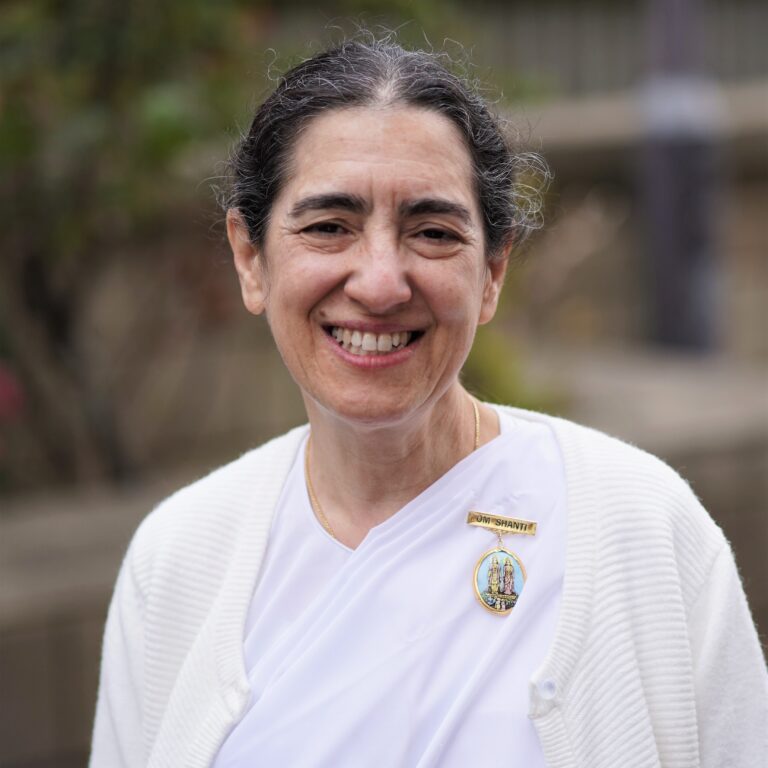
Sister Maureen Goodman, programme director at the Brahma Kumaris UK

Natasha Chawla, researcher at the University of Oxford whose academic focus is the ecological philosophy of Rabindranath Tagore
To me, Diwali’s celebration of light over darkness extends naturally to our relationship with the Earth. The festival commemorates Lord Rama’s return to Ayodhya, celebrating light over darkness and knowledge over ignorance through his victory over forces that disturbed cosmic order. Diwali also marks the harvest season, a time when we traditionally honour Lakshmi (the goddess of prosperity and abundance) by cleaning our homes and surroundings. This act of cleanliness and purification isn’t merely physical; it reflects the Hindu principle of dharma—our duty to maintain cosmic balance and keep things in right order. Just as we clean our homes to restore harmony and welcome prosperity, we are called to consider our impact on the larger home we all share: the Earth. This annual act of cleaning our homes can remind us to purify our relationship with nature through mindful consumption, sustainable practices, and healing the damage we’ve caused.
When we light diyas (oil lamps), I’m reminded that true illumination means living consciously, which means not wastefully. The ancient Hindu understanding that divinity pervades all of nature, from rivers revered as goddesses to trees
considered sacred, calls us to practice ahimsa (non-violence) toward our environment. Environmental justice, from this perspective, isn’t separate from spiritual practice; it’s integral to it, because the Earth itself is sacred, not merely a resource for human use. The Bhagavad Gita (3:14) teaches that those who take without giving back disturb the cosmic order: “From food come all creatures; from rain comes food; from sacrifice comes rain; and sacrifice comes from action.”
During Diwali, as we seek blessings for knowledge and abundance, we must also commit to being guardians of the Earth’s abundance. For when we break the cycles of nature, we violate dharma itself, creating a darkness that no amount of festival lights can dispel. If the oil lamps we light symbolise knowledge dispelling ignorance, let them remind us that no greater ignorance exists than destroying the web of life that connects us all. Just as Lord Rama’s return restored righteousness to his kingdom, Diwali calls us to restore righteousness in our relationship with the Earth—reminding us that prosperity without sustainability is merely an illusion, and that honouring the divine means protecting the sacred balance of which we’re all part.
Rāma is honoured in Hindu tradition as Maryādā Puruṣottama which reflects his embodiment of the highest virtues of dignity and exemplary conduct. He embodies many ideals at once: the dutiful son who accepts exile to keep his father’s word; the faithful husband devoted to Sītā; the just king whose Rāma-rājya is remembered as a reign of justice and prosperity; and, less often noticed, the guardian of the natural world, who treats the forests and their creatures as sacred companions in his quest.
Diwali celebrates the return of Lord Rāma to Ayodhyā after years of exile, when the citizens welcomed him home with rows of glowing lamps. That light which greeted Rāma’s homecoming was more than a sign of joy: it affirmed a sacred bond between human life and the natural world that had carried him through his journey. Though God as Rāma could have destroyed evil by his own power, he chose instead to work in harmony with creation. The Rāmāyaṇa shows again and again that creation itself participates in the drama of dharma.
During his years in the forest of Daṇḍakāraṇya, Rāma protected sages and wildlife from the rākṣasas who desecrated it. When he needed to cross the ocean to Laṅkā, the sea-god Varuṇa revealed how a bridge of floating stones could be built, nature becoming an ally in the struggle against injustice. An entire army of forest-dwellers, the vānaras, became his trusted companions and warriors. And when Lakṣmaṇa lay gravely wounded, the mountains of the Himalayas yielded the life-giving Sañjīvaniherb, earth’s own medicine.
Hindu thought sees the world as inseparable from God. The very idea of avatāra, that the Divine descends into time and matter as Rāma, reveals creation as the theatre of God’s action. Rivers, forests, animals and mountains are not inert resources but participants in this sacred story. Rural Hindu cultures still honour this truth, rivers are mothers, trees bear names, and the spirits of field and forest are acknowledged as bestowers of gifts from the Supreme. Rāma’s story becomes a lesson in humility and collaboration, an invitation to see the natural world not as a backdrop, but as a co-worker in sustaining dharma.
To celebrate Diwali is therefore more than remembering Rāma’s homecoming. It is a pledge to protect the earth as God’s own dwelling place, to care for the living presence in every river, tree and creature. This ancient vision speaks urgently today, and our stewardship is itself an act of worship, the very lesson embodied by Rāma.

Dr Sachi Patel, Multifaith Coordinator and Advisor at SOAS and Hindu chaplain at King’s College London