April 2026
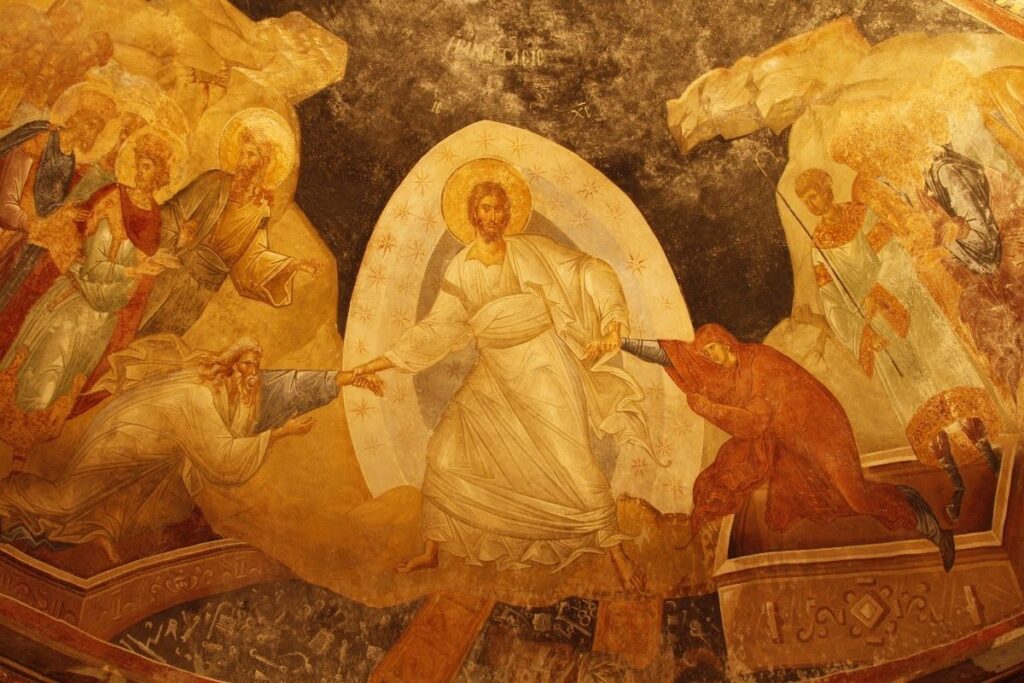
In ‘Harrowing of Hades’, a fresco in the parecclesion or side mortuary chapel of the Chora Church, Istanbul, c. 1315, the raising of Adam and Eve is depicted as part of the Resurrection icon, as it always is in the East. © José Luiz Bernardes Ribeiro / CC BY-SA 3.0
Dear Faith for the Climate network,
Greetings and welcome to our April update. We are still in the month of Shawwal, and Muslims from Malaysia (like me) insist that Eid al-Fitr is a month-long festival – so Eid Mubarak to all who are celebrating.
We are also marking the beginning of the Jewish Passover and the Paschal Triduum of Maundy Thursday, Good Friday, Holy Saturday, and Easter Sunday in the Western Christian rite – so Chag Pesach Sameach, and a blessed Maundy Thursday, Good Friday and happy Easter to all those celebrating, too.
These festivities are being observed amid the catastrophic humanitarian and ecological fallout from the war in the Middle East. For me, it is impossible not to contemplate this violence and destruction right now through the lens of the Passion of Jesus, with its themes of scapegoating, torture, imperialism, and exploitation.
I am especially moved by an understanding of the death and resurrection of Jesus Christ from the Orthodox Christian tradition, which commemorates Good Friday and Easter a week later than the Western rite this year. Specifically, it’s an interpretation of what is known as the Harrowing of Hell or the Harrowing of Hades – the moment between the crucifixion of Jesus and his resurrection. In the interfaith ethos you must now be familiar with at Faith for the Climate I, a Muslim, first encountered this perspective of Orthodox Christian theology through the writings of Father Richard Rohr, a Roman Catholic priest.
According to Father Richard, visual depictions of the Resurrection in Western Christianity have tended to emphasise its individualistic character. Jesus is often depicted walking alone out of the tomb carrying a white flag. In Eastern Orthodox iconography, however, Jesus is surrounded by multitudes, with ‘chains, bolts, and locks flying in all directions’ – see, for example, the fresco at the top of this email. In other words, the Resurrection in the Eastern church represents not only individual salvation but corporate, universal redemption.
As Father Richard puts it, ‘if we don’t believe that every crucifixion – war, poverty, torture, hunger – can somehow be redeemed, who of us would not be angry, cynical, hopeless?’ The cruficixion is therefore not simply a precursor to the salvation of individual people but a story of collective, cosmic liberation.
As ever, I relate these insights not for theological point-scoring. The question, rather, is how can these specific pieces of wisdom from specific traditions nourish our faith for the climate justice?
For me, it’s about believing that what we all do matters, because the work of justice, healing, and liberation is always mutual and interconnected. This is what Martin Luther King Jr meant when he said that injustice anywhere is a threat to justice everywhere.
So, even if all you have is 10 minutes this month to read this update and take a single online action, this matters. If you showed up at the Together march last Saturday, this matters. If you are honouring a sacred festival this month with your family or community in ways that are gentle and kind to the planet, this matters. If you can do more, fantastic – this, too, matters.
Read on for a treasury of new actions and events you can be part of, as well as resources to fortify you.
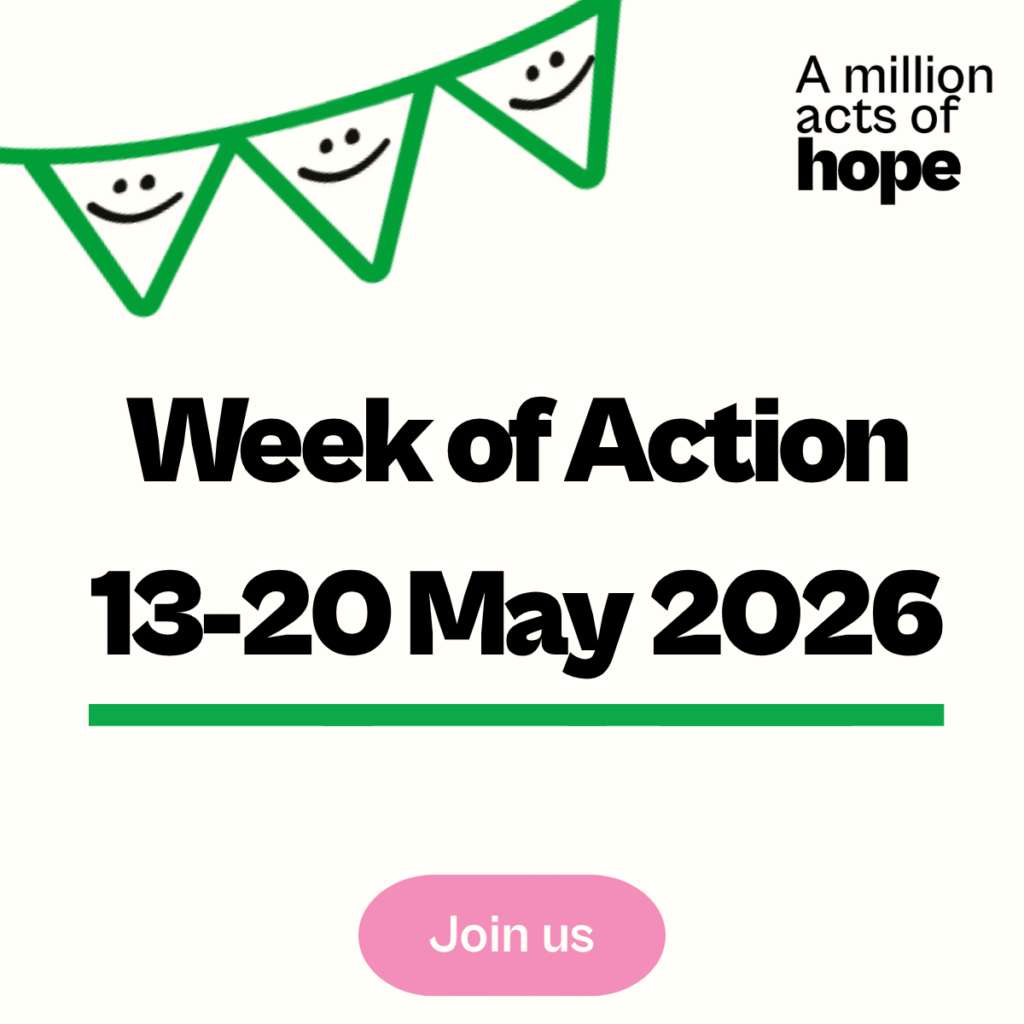
A Million Acts of Hope (13-20 May)
Thank you to everyone who joined our faith bloc at the Together march last Saturday. If you signed up beforehand, you would have received an update from the organisers about follow-up plans.
If you missed the march, don’t fret. We’re coming together with hundreds of charities, community and faith groups for A Million Acts of Hope, 13-20 May. Please consider asking your communities and congregations to join, too.
We have six weeks until we visibly thank all those who live and act in hope and to do something hopeful ourselves. Why? Because hope always counts.
There’s still time to sign up as a partner. No one can say the UK is divided when so many of us come together to show we’re not. The Faith for the Climate team are putting together our own plans and will announce them soon. Let us know if you have plans you’d like us to share.
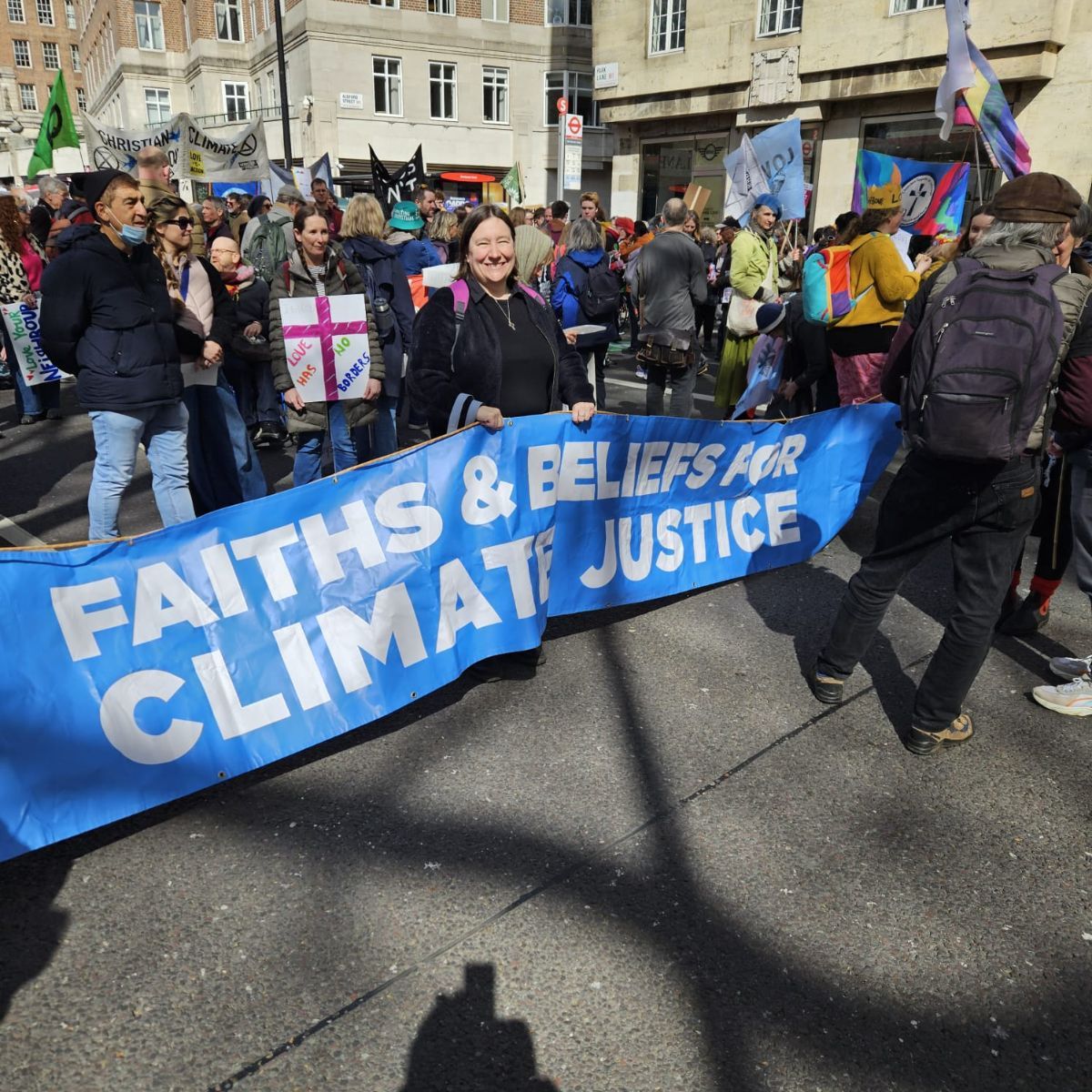
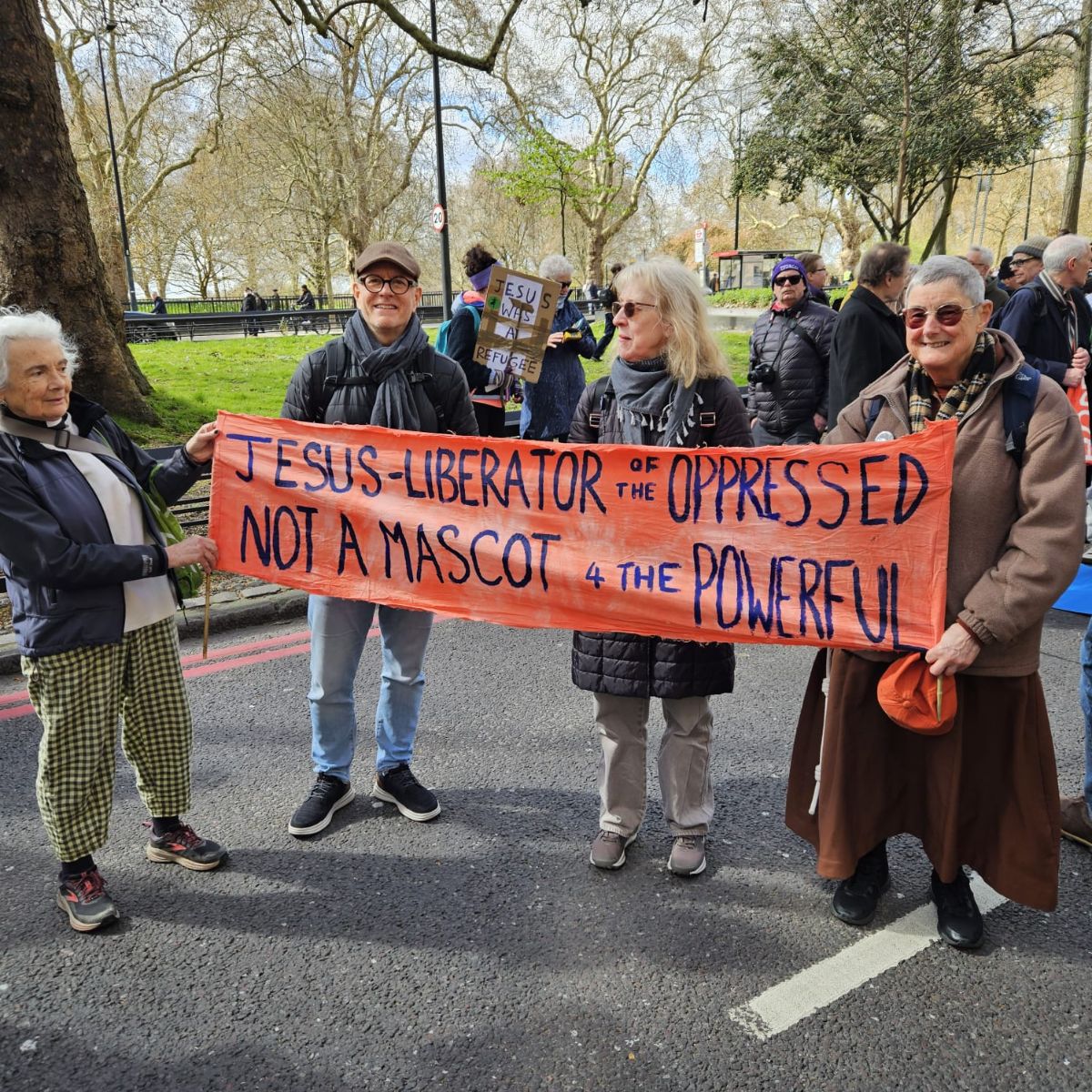
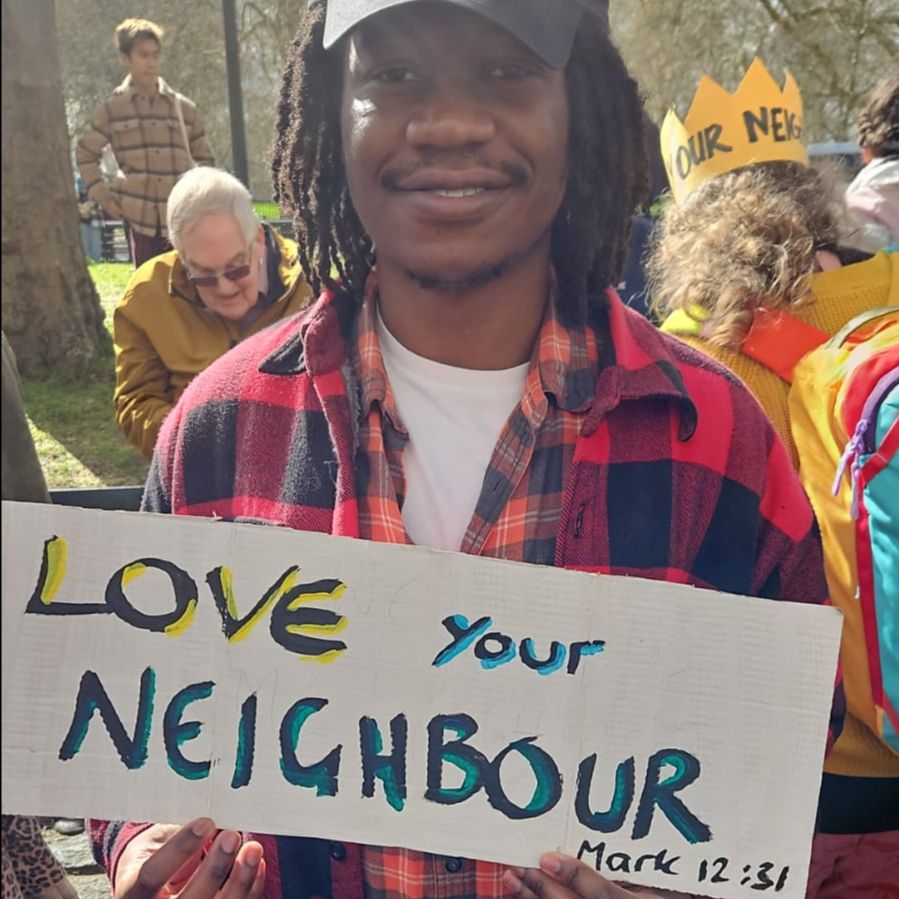
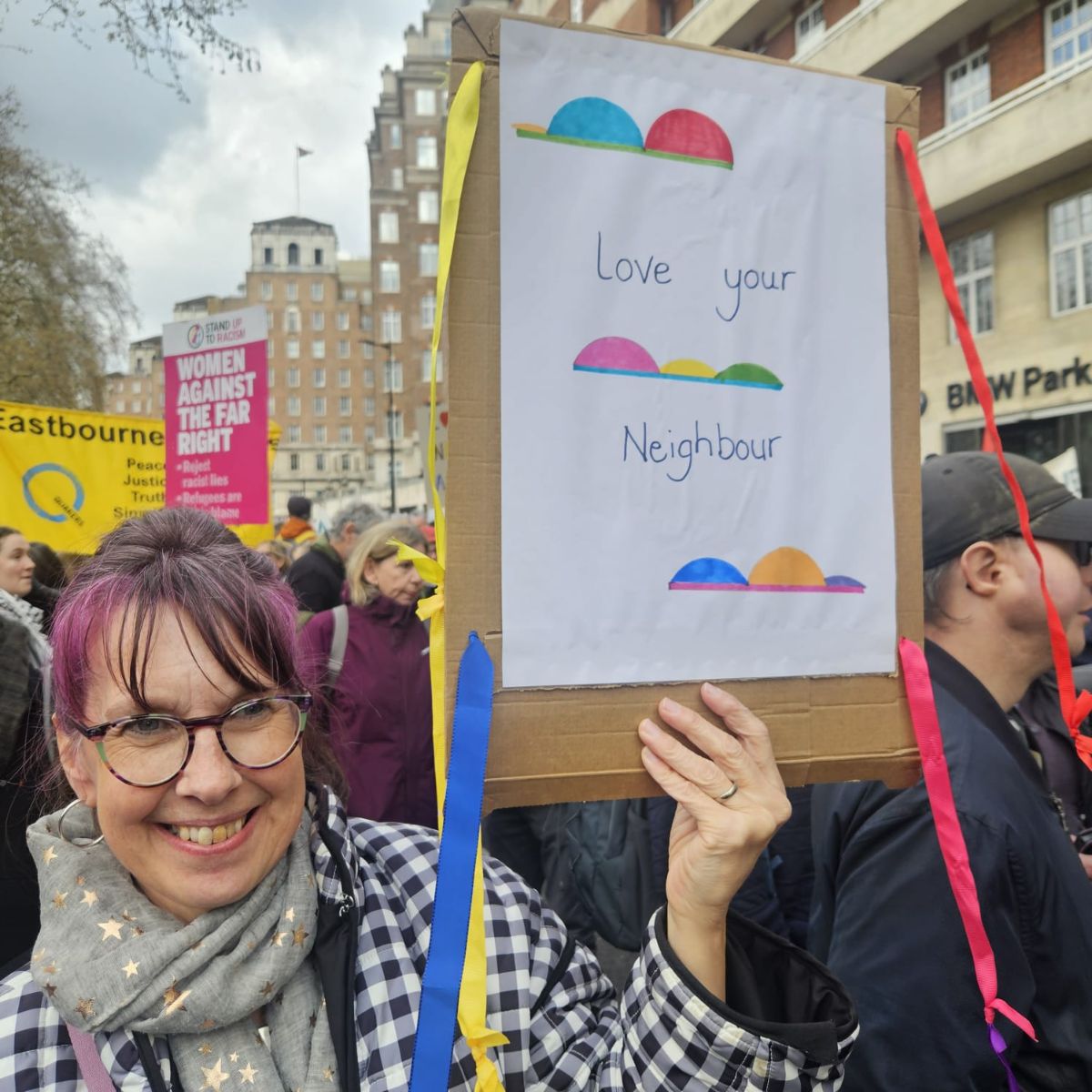
Spotted at the faith bloc during the Together march, 28 March 2026 (pics shared with permission)
Calling folks in Doncaster North and Leeds North West
Are you up for some urgent letter writing? Read on!
On 28-29 April, the Santa Marta summit, the First Conference on Transitioning Away from Fossil Fuels, will be hosted by Colombia and the Netherlands. As people of faith, it’s important for us to ask the UK government to participate in this summit and show that it’s serious about tackling the root cause of the climate crisis – the fossil fuel industry. We want senior ministers to:
- attend the High-Level Segment of the conference,
- work on the roadmap to transition away from fossil fuels, and
- commit the UK’s fair share of funding for the transition.
Faith for the Climate is sending our own interfaith letter to the UK government, but it would be great if individuals or local communities of faith also write letters, especially those based in Doncaster North (constituency of Ed Miliband, Secretary of State for Energy Security and Net Zero) or Leeds North West (constituency of Katie White, Undersecretary of State for Climate).
What to do:
- Check the boundaries for Doncaster North and Leeds North West to see if you have a local group or congregation in either area.
- Double check with the Find my MP tool.
- Once you’ve checked, use our email templates below – they work best with Outlook. You will need to adapt the wording in your own voice depending on whether you are writing as individuals or on behalf of a community.
- If you want to send physical letters – and this is always a good idea – feel free to copy and paste the email text for your correspondence.
- Remember to include your address, or the address of your community, group, or place of worship, including the postcode, so that Ed and Katie know you are located in their constituency.
Tell the G7: Tax polluters' profits now
Fossil fuel companies and war-mongering nation-states are actually cashing in on war in the Middle East and elsewhere. This is utterly unfair, and the least that the richest countries can do – the G7 – is tax these polluters’ profits now, and make these taxes permanent.

Host a community screening of the People's Emergency Briefing
There’s still time to host or join screenings of the National Emergency Briefing’s 45-minute public-information film, the Peoples Emergency Briefing, available from 7 April. Organisers are supported with a full toolkit, including the film, guidance and digital publicity assets. Faith communities and places of worship are most welcome to register interest or find out more at nebriefing.org/take-action, or contact info@nebriefing.org.
Upcoming events
Tuesday, 7 April, 1pm BST (online): Intro to 360°carbon. With almost 5,500 accounts, Climate Stewards’ carbon footprint calculator for churches and charities is getting busy. To help people make the most of this online tool, they are running a series of drop-in sessions with no need to register in advance – just drop in. Even if you know nothing about it and just want to find out more about this tool, join them on Tuesday 7 April, 1pm BST on Zoom: https://us02web.zoom.us/j/81432719007
There will be a follow-up Q&A session on Thursday, 23 April, 8pm BST. Again, no need to register in advance – just turn up and join on Zoom: https://us02web.zoom.us/j/86587826290
Monday, 13 April, 6.30pm BST (online): Our Common Home: Engaging Politicians, with Bishop John Arnold, the Roman Catholic Diocesan Environmental Leads Network, and friends. With the May local elections fast approaching, now is an important time to let politicians know our views on climate and justice. Following a meeting with the Catholic Diocesan Environment Leads of England and Wales, an alliance of organisations has come together to offer parishioners guidance on key environmental issues and to help them engage local politicians in dialogue about defending our common home and safeguarding the dignity of all our siblings. Register here.
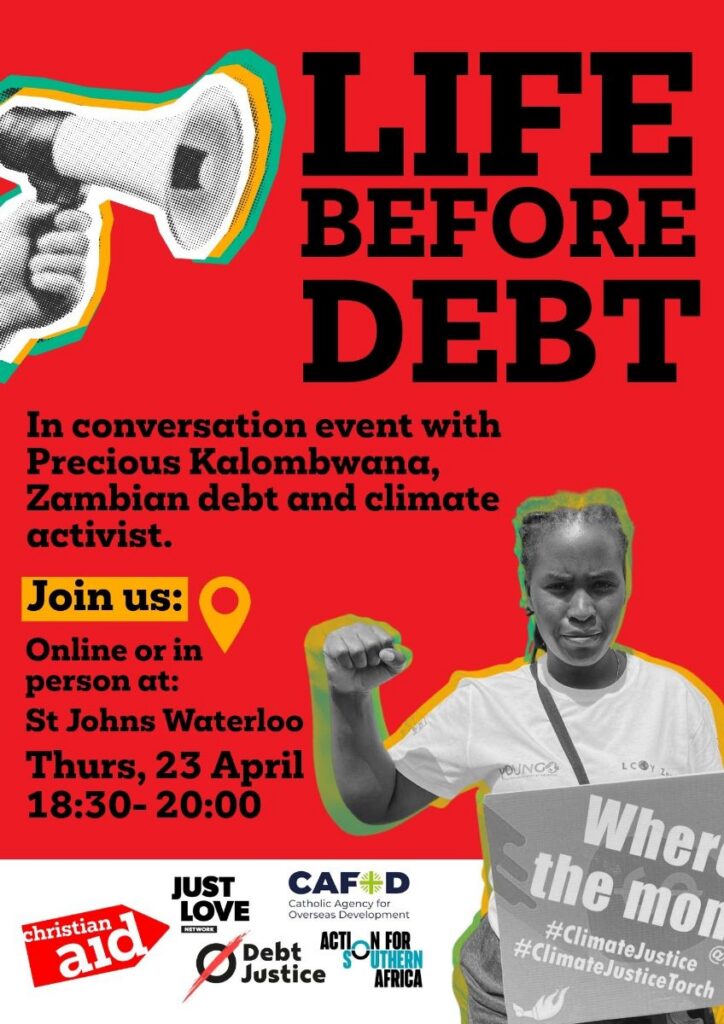
Thursday, 23 April, 6.30-8pm BST (online and in person): Life before Debt: in conversation with Precious Kalombwana. In Zambia poverty is robbing people of their education and their dreams. Activist Precious Kalombwana has seen it with her own eyes. She is speaking out for a different future. Come and hear Precious in conversation with Jennifer Larbie (Christian Aid’s UK Influencing Lead and author of Between Life and Debt) and Heidi Chow (Director of Debt Justice). Together they’ll unpack how unjust debt is driving poverty in Zambia and around the world. They will look at how the debt and climate crises are creating a perfect storm for poverty and how we can all be part of calling for justice.This event is in collaboration with Action for Southern Africa, Cafod, Debt Justice and Just Love. You can join in person at St John’s Church Waterloo or via the online broadcast. See here for joining in person London and here for the online broadcast.
Thursday, 23 April, 7-8pm BST (online): Earth Crisis Forum 10: A Tapestry of Place, People and Possibility. This is an online gathering led by the World Community for Christian Meditation’s Earth Crisis meditation group for keeping an open heart in a time of chaos. Find out more and register here.
Saturday, 16 May, 9.45am-4.45pm BST (in person): Being Peace in the Face of War. Join this day of Buddhist wisdom teachings, and practices at the Jamyang Buddhist Centre in London. With a meditation at the Imperial War Museum. More details on Eventbrite.
Saturday, 30 May – Sunday, 31 May (in person): The Laudato Si’ Research Institute, in collaboration with the Al Mahdi Institute and the Cambridge Muslim College are organising a two-day formation course, Christian-Muslim Dialogues on Ecology. The course aims at equipping Muslim and Christian communities with the intellectual and theological resources to learn from each other and respond together to today’s ecological and political challenges. Find out more and register here.
Information resources
If you want a deeper dive, this article discusses who profits from the current US and Israel-led war with Iran. While this profiteering explains the calls for more North Sea oil drilling in the UK, the truth is that transitioning to clean, renewable energy is the best way to lower everyone’s energy bills. However, the critical minerals needed for a green transition must not drive yet more ecological degradation and injustice, which is why the Vatican has called for divestment from mining.
The news headlines might be dire, but we must always remember that people power does create change. This article explains how a grassroots UK campaign sparked a multi‑billion‑dollar exit from public fossil fuel finance. Yes, there has since been backlash and footdragging, which is why I was also pleased to be forwarded this inspiring piece by our faithful member Neelam Sharma of the Yoko Forum, in which the US activist and writer Rebecca Solnit explains why she is hopeful that ‘a new world is being born’.
What does this new world being born look like? It might just look like these students at London South Bank University setting up a Repair and Learn Hub – a new initiative that blends hands‑on learning and real environmental impact. It’s a space designed to empower local residents to fix, reuse, and rethink the things they already own.
Finally, I simply had to share this wonderful short film, ‘Mountains That Weep‘, by the Portugal-based writer and filmmaker Aurora Solá. It’s an enchanting, wondrous story that honours climate grief whilst fortifying sacred activism.
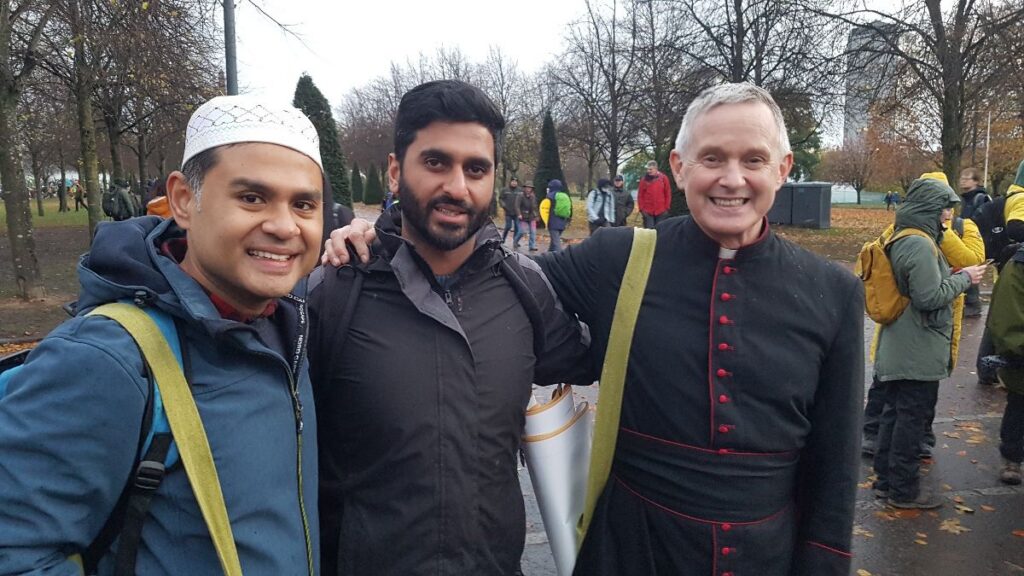
Rosh (centre) with me and Canon Giles Goddard at the COP26 Global Day of Action in Glasgow, 6 Nov 2021
Announcement: Thank you Rosh!
It is with a heavy heart that we say farewell to our beloved movement builder Rosh Lal. Rosh joined Faith for the Climate in the heady days before the UN climate talks in Glasgow, COP26, back in 2021.
The constraints in the funding landscape mean that we’re going through a period of transition at Faith for the Climate, which entails calibrating our capacity accordingly. We want to say a huge thank you to Rosh for all that he is and everything he has brought to our network, and to wish him all the very best in his activist (and musical) endeavours.
Thank you for reading this far, and well done for all that you do for people and planet. I started with a reflection about Easter, and I’ll end with something for Earth Day which falls on 22 April.
Earth Day was first observed in 1970 and aimed to bring together movements concerned with ecological justice, peace, and labour rights. Serendipitously, in April 1970, the Canadian singer-songwriter Joni Mitchell released her environmental justice classic, ‘Big Yellow Taxi’. All those decades ago she was already singing: ‘Don’t it always seem to go, that you don’t know what you’ve got ’til its gone?’
It’s a song that’s been on my mind recently, and perfect to close this update.
Joni Mitchell – Big Yellow Taxi (Official Lyric Video)
Shanon Shah
Director at Faith for the Climate
About Faith for the Climate's monthly e-news
Faith for the Climate exists to encourage, inspire and equip faith communities in their work on climate change. If you have any items you would like to be included in upcoming editions of our newsletter, contact us, find us on Facebook, Instagram, and LinkedIn. Subscribe to our e-news here.