January 2026
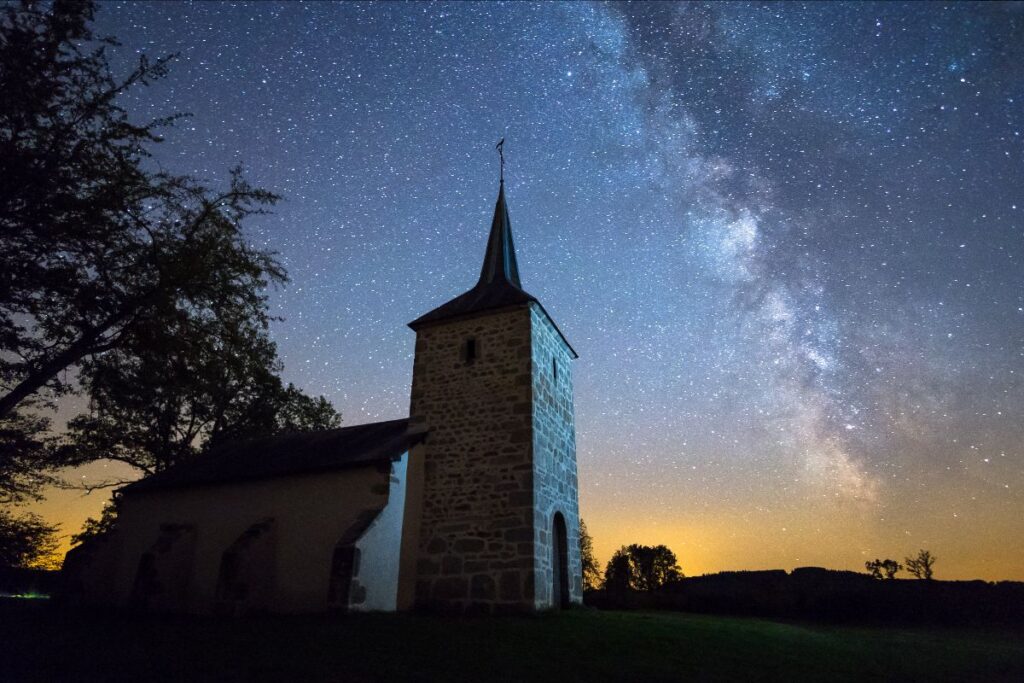
Savault Chapel in a clear starry night, in Ouroux-en-Morvan, Bourgogne, France (by Benh LIEU SONG, Wikimedia Commons)
Dear Faith for the Climate network,
Welcome to our first e-news update of the year. It arrives slightly later than usual, as the Faith for the Climate team took some time to rest over recent weeks. I am still reflecting on your thoughtful responses to our end-of-year survey, as well as on the intensity of the headlines that have already marked the opening of this year.
As I prepared this bulletin, a phrase came to my heart — call it inspiration or an answer to prayer: ‘Begin as you mean to go on.’ It comes from a longer quote by the nineteenth-century English Baptist preacher and abolitionist Charles Spurgeon: ‘Begin as you mean to go on, and go on as you began, and let the Lord be all in all to you.’
Anyone committed to climate justice and justice more broadly could be forgiven for beginning 2026 with fear and trembling. While we should not ignore these alarm bells, remaining trapped in dread and doomism does not ultimately serve our work, our bodies, and our souls. One of the gifts of belonging to an interfaith climate justice network is the ability to draw on deeper spiritual resources that offer alternative ways of seeing and responding.
This update arrives on the eve of the Isrāʾ and Miʿrāj, the night journey of the Prophet Muhammad, peace be upon him, from Mecca to Jerusalem (the Isrāʾ) and his heavenly ascension (the Miʿrāj). This story is a wellspring of wisdom and mystical reflection in the Islamic tradition. The night journey to Jerusalem symbolises Islam’s shared rootedness with Judaism and Christianity, linking Muhammad with Moses and Jesus. In the Qur’an, Muhammad’s ascension is then described in dazzling language. One verse from Sūrah al-Najm, the Chapter of the Unfolding, has long stayed with me: ‘The heart did not give the lie to what he saw.’
In other words, Muhammad did not behold the Divine with his eyes but with his heart. In Islam, as in many spiritual traditions, the heart is understood as the seat of true wisdom and perception.
As I grow older, I am increasingly struck by what follows the ascension: Muhammad’s descent back into the world. Like the Bodhisattva in the Buddhist tradition who delays personal liberation out of compassion for others, Muhammad returns from paradise for the sake of humanity and creation. This is especially poignant given that the Isrāʾ and Miʿrāj took place during the Year of Sorrow, a time marked by the deaths of his beloved wife Khadija and his uncle Abu Talib.
For me, this descent offers a powerful model for how to begin as we mean to go on: not by escaping the injustices and sufferings of this world, but by nurturing inner and outer transformation within it.
Because the Islamic calendar is lunar, its observances move roughly eleven days earlier each year in the solar or Gregorian calendar. This year, the Isrāʾ and Miʿrāj falls a fortnight before the Celtic festival of Imbolc. Imbolc is associated with the stirring of life beneath winter’s surface — its name is often linked to ideas of pregnancy, milk, and gestation.
It is at Imbolc that the Celtic goddess Brighid became pregnant with the seed of the sun. Rooted in agrarian life, Imbolc therefore marks a time when divine energy is invoked for the land in hope of future harvests. According to some historians Brigid, a goddess associated with fire and healing, was later Christianised as St Brigid, a patron saint of Ireland.
I share these stories not to compare religions or to debate theological truths, but because, as a Muslim, reflecting on Imbolc has given new layers to my understanding of the Isrāʾ and Miʿrāj. In both sacred moments, the symbolism of night is central. Imbolc takes place in the depth of winter, yet its meaning lies not in escaping darkness but in recognising the light and life quietly growing within it. This is how transformation unfolds in nature: seasonally, patiently, cyclically.
The Isrāʾ and Miʿrāj, by contrast, is a singular, revelatory, cosmic event. Yet it too unfolds at night. In both traditions, darkness is not a cause for despair but a threshold — a space of becoming, where wondrous transformation begins to take shape.
It is always darkest before dawn.
In the spirit of journeying and crossing thresholds, I hope this reflection offers encouragement to your heart as we begin the year together. Read on for details of our first webinar of the year, upcoming events, and useful resources.
Webinar announcement
Interfaith renewal and climate justice: Abrahamic perspectives
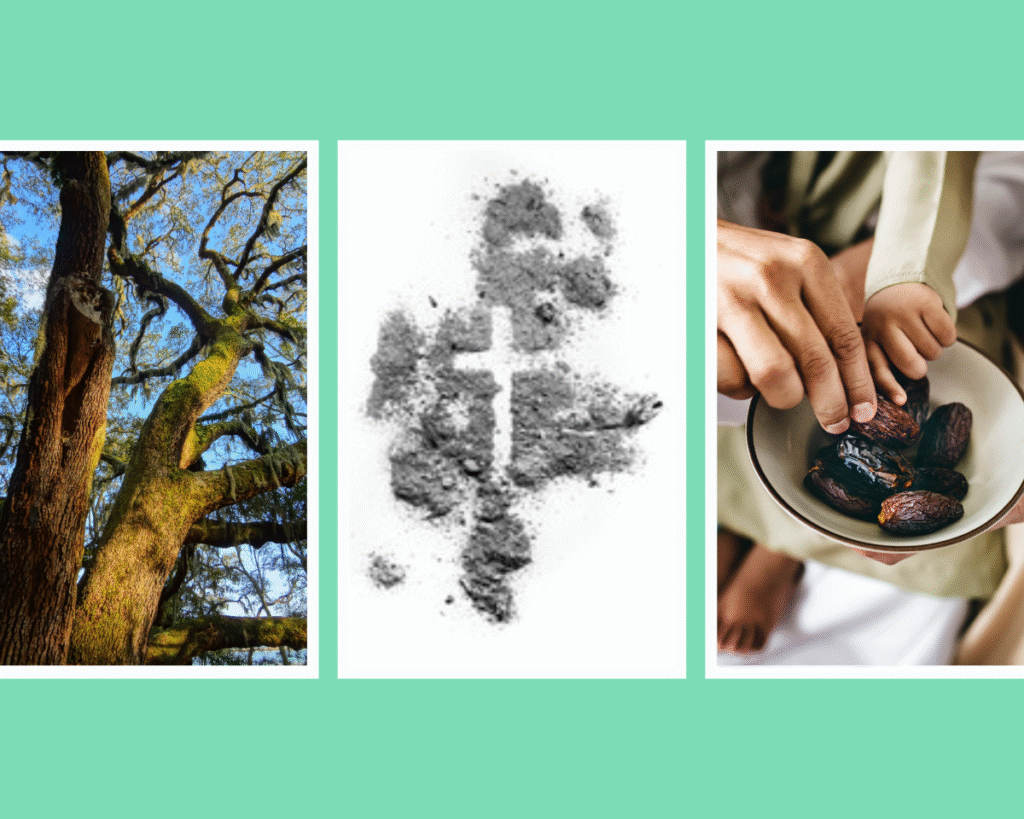
The series of delightful coincidences continues into the month of February this year. In the Latin rite of Christianity, the penitential season of Lent begins on Ash Wednesday, 18 February, which roughly coincides with the start of the holy month of Ramadan for Muslims. The month opens with the Jewish festival of Tu B’Shevat – the Birthday of the Trees – from sundown on Sunday, 1 February to nightfall on Monday, 2 February.
At Faith for the Climate, we’re commemorating this confluence of dates with our first webinar of 2026. Our Jewish, Christian and Muslim panelists will share insights about how Tu B’Shevat, Lent, and Ramadan can nourish our work on climate justice as well as foster healthier intra-faith and interfaith relations.
Join us on Wednesday, 4 February 2026, 1-2pm GMT.
Upcoming Events
Tuesday, 20 January: The UK Baha’i Office of Public Affairs is organising the hybrid event ‘From Belém to London: Drawing Connections between International Frameworks and National Approaches’ from 6.30-8pm. The event aims to clarify guiding principles and experiences that came out of the UN climate talks, COP30 ,which could inspire climate action at the national level in the UK. RSVP to opauk@bahai.org.uk by Monday 19 January for in-person attendance (venue: Parvin Room, 27 Rutland Gate, London, SW7 1PD). For online attendance, here is the Zoom link.
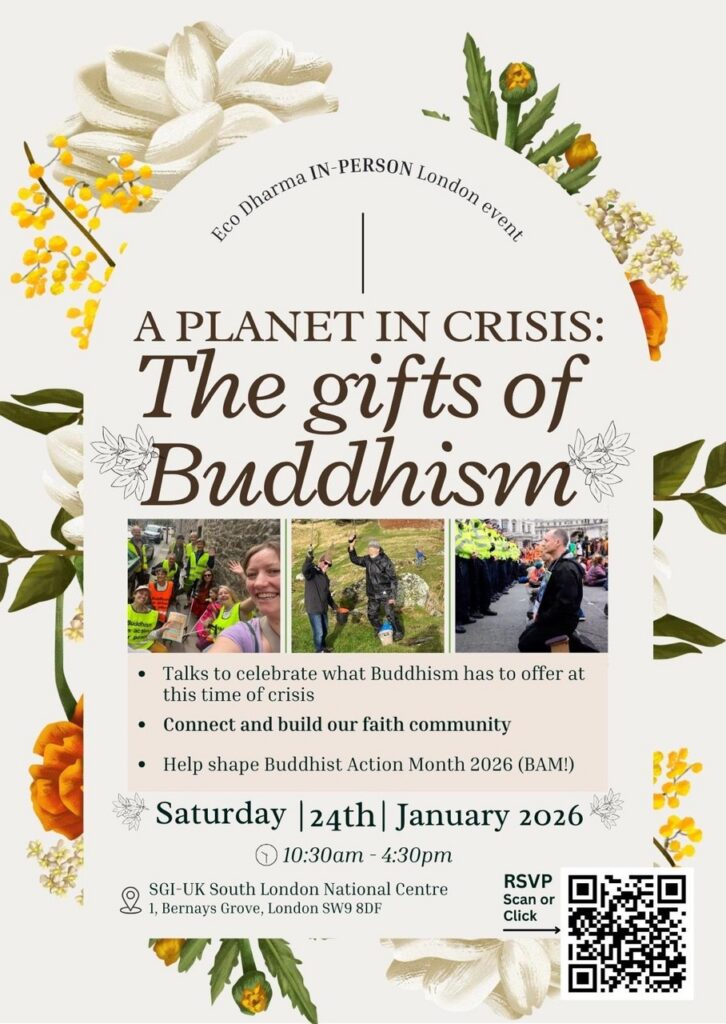
Saturday, 24 January: The Eco Dharma Network are holding an in-person event, ‘A Planet in Crisis: the Gifts of Buddhism’, 10.30am to 4.30pm, in Brixton, London. They have some inspiring speakers (Yannai Postelnik, Jiggy Bhore, Amal Abeyawardene, Narapa, Dorinda Talbot, and David Midgley) and lots of time for interaction. You can sign up here or via the QR code on the leaflet (see above). Please share far and wide.
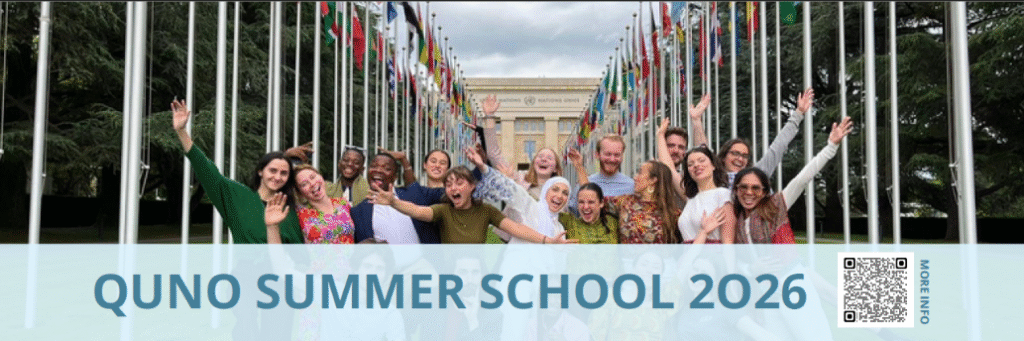
Sunday, 25 January (application deadline): Applications for the Quaker United Nations Summer School 2026 (QUNSS) are now open. QUNSS will take place in Geneva from June 29 to July 9 (in person), and the deadline for applications is January 25th, 23:59 (Central European Time, CET). This summer school offers a unique opportunity for young people to engage with the United Nations, multilateralism, and the work of the Quaker United Nations Office (QUNO), particularly on human rights, migration, climate change, peace and disarmament, and economic justice. Applications are welcomed from young people aged 20–26 from all regions and backgrounds who are globally minded, locally rooted, and involved in areas such as social justice, community engagement, climate action, advocacy, or policy, among others. Spread the word and find out more from the website.
Wednesday, 28 January: Ahista Stories, a South Asian sustainable fashion community, are hosting an online Volunteer Open Evening. Team Ahista will talk about how they work together, what their plans are for 2026 and specific volunteer roles they are recruiting for. There will be plenty of time to ask questions so make sure you don’t miss out. Sign up here.
Monday, 9 February: The 2026 Youth Interfaith Summit, hosted by Faith and Belief Forum and the London School of Economics Faith Centre will be the culmination of 3 years exploring the intersection of faith and climate. The event — Roots & Routes: Faith, Youth and Climate in London — will include storytelling through art, workshops and masterclasses with thought leaders and practitioners, and explore the power of faith to tackle the challenge in our own back yard, including a walking tour and masterclass in London that evening. Get tickets on Eventbrite.
Friday, 27 February: Join ‘A Global Circle of Light for the Animal Kingdom’, a 24-hour sunrise-to-sunrise prayer ceremony which aims to unite people of all faiths and nations in a shared act of compassion for all sentient life. This is an open invitation, and more information on the organisers and how to participate can be found on the website.
Information resources
‘Faith and the climate crisis: ten years since Laudato Si’: In case you missed it, I was featured on BCC Radio 4’s Beyond Belief programme last December on this topic. I was on a panel with Carmody Grey, Theologian and Professor of Integral Ecology at Radboud University in the Netherlands, and long-time friend of Faith for the Climate Rabbi Jonathan Wittenberg, co-founder of Eco-Judaism. We discussed how Laudato Si inspired global political co-operation and provided ‘moral ballast’ in the call for climate action. You can listen here.
Here’s some good news as an antidote to the bad news you’re probably inundated with — for the first time, renewables have toppled coal as the world’s leading source of electricity. Yet progress is uneven. The shift away from fossil fuels has slowed in the United States and the European Union but accelerated sharply in developing nations. What can we learn to accelerate this positive tipping point here in the UK? Read this article in The Conversation to find out.
This surge in renewable energy is yet another indicator that the writing is on the wall for fossil fuels. But the industry is not giving up without a fight. This much is clear from US President Donald Trump’s declaration that the US will now ‘run’ Venezuela and that Venezuela ‘will be turning over’ up to 50 million barrels of oil to the US. As scary as this is, it does not change the fact that the renewable sector is growing. Workers are moving out of fossil fuel work into sectors which need to grow rapidly. The question is not whether change will happen but who will shape it. This transition must not leave workers behind, communities broken, or livelihoods destroyed. As people of faith, we hold that the future cannot be built on inequality, insecurity, and exploitation. Good news then that 2025-26 has been declared the Year of Trade Union Climate Action. Find resources, links, events, and networks at the Trade Union Climate Action Hub.
Never underestimate the power of showing up, even when it’s daunting at a time when politics seems so polarised and uncertain. Remember Act Now, Change Forever, the climate mass lobby of Parliament last July? Whether you joined us in Westminster, took part locally, supported others to get involved, or helped spread the word, you helped show what can happen when communities come together around the things they love. Read this reflection and watch the recap video below for inspiration:
Act Now, Change Forever: a story of people power
Thank you for reading this far, and well done for all that you do for people and planet. As a faith-inspired network for climate justice, let’s begin 2026 as we mean to go on — with hope and lovingkindness for all.
I hope to see you on Wednesday, 4 February, for our first webinar of the year.
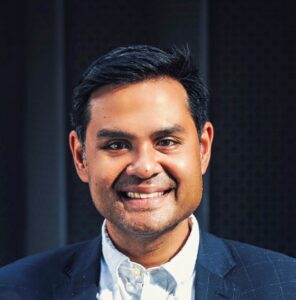
Shanon Shah
Director at Faith for the Climate
About Faith for the Climate's monthly e-news
Faith for the Climate exists to encourage, inspire and equip faith communities in their work on climate change. If you have any items you would like to be included in upcoming editions of our newsletter, contact us, find us on Facebook, Instagram, and LinkedIn. Subscribe to our e-news here.