
June 2026
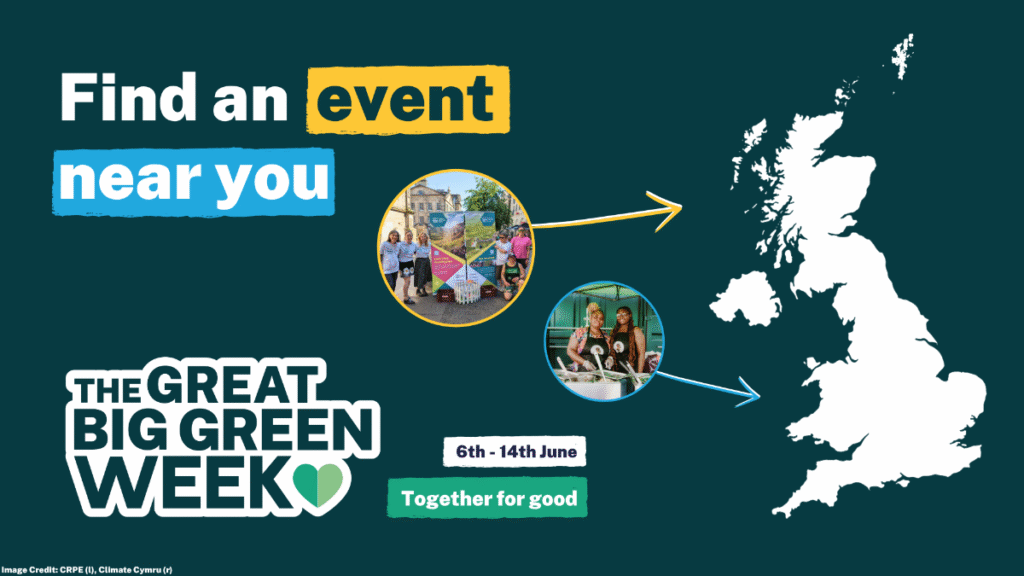
Greetings and welcome to our June update. It’s that time of the year again, when something good will be happening near you next week. That’s right – the Great Big Green Week is back, and runs from 6 to 14 June.
The Great Big Green Week is the UK’s only mass moment for nature and climate, with two million people expected to take part. Events are going live across the UK every day: litter picks, repair cafés, nature walks, community feasts and more. Every event is different, because every community is different.
Faith for the Climate is supporting the launch of the book Called to Care (Inter-Varsity Press) by Australian author and Anglican Overseas Aid CEO Jo Knight, on Sunday 7 June, 4pm BST, at St John’s Church, Waterloo. The event is organised by our friends at Christian Aid in conjunction with Jo’s visit to London for an Anglican Alliance meeting.
This in-person event is free to attend but booking is essential. Find out more and register on Eventbrite.
Don’t worry if you’re not in London or can’t make it. You can find out what’s on near you by visiting the Great Big Green Week website: greatbiggreenweek.com. If you’re browsing on social media, use #GreatBigGreenWeek and #TogetherForGood.
There’s a lot more happening this month, which is also Buddhist Action Month. In case you missed our special webinar for A Million Acts of Hope last month, you can catch up here to find out what our amazing Buddhist members are up to.
As you will have gathered from our recent updates, we’re doing some deep work, supported by our funder the Joseph Rowntree Charitable Trust, to understand our impact and how we can move forward more effectively. Part of this exercise involves learning from your reflections. My heartfelt thanks to those of you who have provided your very helpful responses already. If you haven’t yet managed to give us your feedback, there’s still time – take 15 minutes to fill this form.
In the coming weeks, we’ll also be redesigning our website so that it becomes a more welcoming and useful resource. Don’t worry, you don’t have to do anything differently. The address will be the same – faithfortheclimate.org.uk – and you will keep receiving these newsletters. What this means for the bigger picture is that we’re setting an intention to grow in depth and quality, and we’re excited to share more with you soon.
Before we get to the announcements, events, actions and resources for this month, I want to try something new. I often start these monthly updates with some spiritual grounding that incorporates insights from different faith traditions. I don’t know why it hasn’t occurred to me to actually name what I’m doing more explicitly. So, here goes!
Spiritual grounding: Muharram and sacred summer
I’m experiencing the impending arrival of summer slightly differently at the moment, partly because of our behind-the-scenes infrastructure-building and partly because this year Muharram, the first month of the Muslim calendar, occurs in mid-June before the summer solstice. Last year, it occurred just after the solstice. This is because the Islamic lunar calendar is approximately 11 days shorter than the Gregorian solar calendar. What this means is that, rather than my usual excitement about socialising with friends and loved ones in the sunny outdoors, I’m feeling a bit more reflective than usual in the leadup to summer.
Muharram, which basically means ‘sacred’ in Arabic, is the month of several symbolic milestones in Muslim sacred history. The most foundational of these is the Hijrah (migration) of the Prophet Muhammad, peace be upon him, from Mecca to Medina. The Islamic calendar is hence also known as the Hijri calendar, and Muslims will mark the start of the Hijri year 1448 on 17 June.
I was brought up in Malaysia and, as a Sunni Muslim, I associated Muharram with gratitude for the saving power of faith in God. Muharram was not merely an occasion to remember the Hijrah – it also commemorated the landing of the ark of Prophet Nuh (the Biblical Noah), peace be upon him, on Mount Judi in modern Turkey, and the parting of the Red Sea by Prophet Musa (the Biblical Moses), peace be upon him, to seek freedom from Pharaoh’s army.
I associated the tenth day of Muharram, known as Ashura, with recommended optional fasting (full disclosure: which I never observed) and increased worship. Despite not fasting, I would look forward to feasting on the bubur asyura prepared by my paternal aunts – a sweet dish consisting of ten ingredients peculiar to the north of peninsula Malaysia where I grew up.
I was therefore quite taken aback when, soon after I arrived in London in 2010 for postgraduate study, I wrongly assumed that Muharram was also a time of fasting and rejoicing for one of my classmates, whom I learnt was a Shia. ‘Absolutely not,’ she said. ‘For us, Muharram is a time of mourning.’
In 680 CE, the Prophet Muhammad’s grandson Husayn ibn Ali (b. 626 CE), along with his family and followers, were massacred by the forces of the second Umayyad Caliph Yazid I in what is commonly known as the tragedy of Karbala. This tragedy was part of the Second Fitna (civil war) in early Muslim history, and was a key turning point in what later became a definitive break between Sunnis and Shias. And this tragedy happened during Muharram.
For Shia Muslims, the first ten days of Muharram are thus a time of mourning culminating on Ashura. This 10-day period is marked by Majlis (gatherings) held to recount the events of Karbala, as well as processions and symbolic acts of grief to honour the sacrifice of Imam Husayn and his companions. The symbolism of Muharram, for Shias, is indivisible from what Husayn symbolises – a revolutionary leader who took the ultimate stand for moral justice.
I won’t pretend that these different interpretations of Muharram do not still engender sectarian divisions and, sadly, violence amongst Muslims today. But, as someone with many Shia friends whom I respect and love dearly – and who was raised in a country that officially criminalises Shia expressions of Islam – the inner meanings I internalised as a Sunni about Muharram have ironically become even more salient precisely because my one-sided childhood understanding of it has been irreversibly challenged and expanded. To me, Muharram is now ultimately a time of deep reverence and critical self-reflection. This, and the solstice later this month, have heightened my awareness of the sacredness of summer.
What does this mean for our work at Faith for the Climate? To me, the intra-faith subtleties about working for climate justice are just as important as building interfaith collaboration and friendship. If we are serious about working for climate justice, we need to understand the complex ways that power operates within and between faith communities, and how this can create multiple forms of oppression that are often not visible in the societal mainstream.
It’s not always easy, and often it means that we can and should only move at the speed of trust rather than rushing things unnecessarily. And it requires lots of continuous learning and un-learning, which can be unsettling at times.
That’s why I try to include a diverse range of goodies in these monthly updates, from personal spiritual reflections, special announcements, upcoming events and actions, to precious information resources that are increasingly rendered invisible by the proliferation of misinformation, artificial intelligence slop, and other divisive technologies.
Read on, and enjoy.
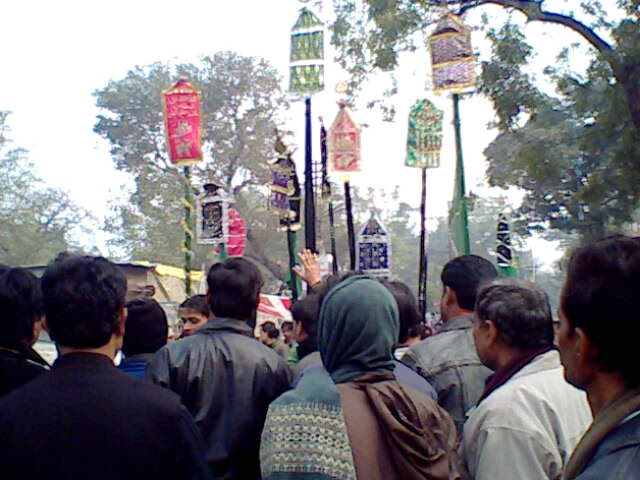
Muharram procession in India with banners symbolising the ensign of Husayn (pic by Sayed Mohd Faiz Haider Rizvi, Public Domain)
ANNOUNCEMENTS
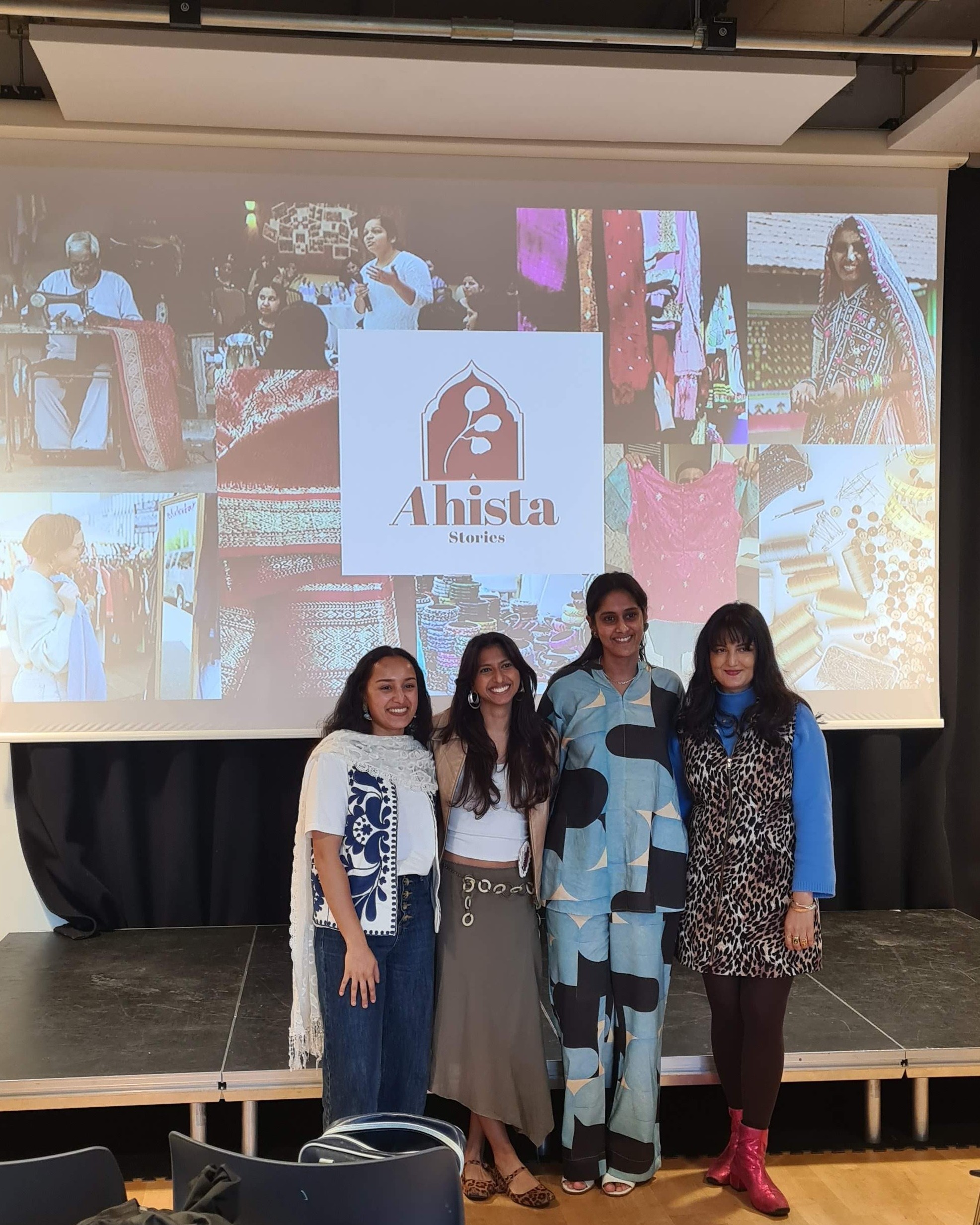
Ahista Stories is a South Asian-led movement towards a fairer fashion system delivering educational talks and upcycling workshops across London, UK. Their fourth annual festival – Ahista Stories Live – is happening on 18 October 2026 in Bethnal Green. They’re looking for freelance creatives, academics and campaigners to pitch ideas for talks and workshops to deliver at the festival, as well as volunteers to support setup. Volunteers (unpaid) can apply here. Speakers and workshop facilitators (paid) can pitch ideas here. Deadline: 30 June 23:59 BST.
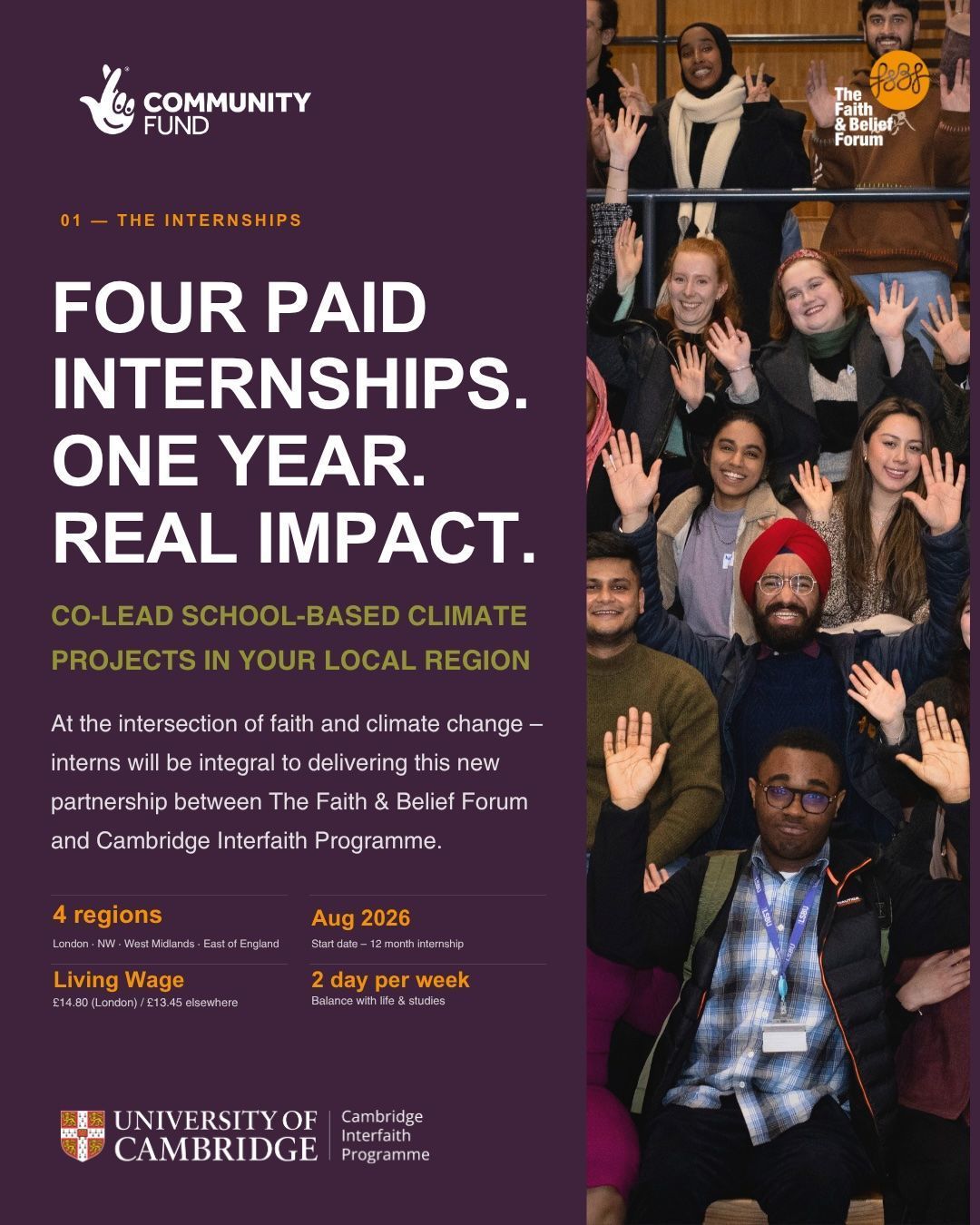
The Faith & Belief Forum, the UK’s largest interfaith charity, is offering four paid Programme Intern positions for the BELIEVE in Climate Action project, funded by The National Lottery Community Fund. This 12-month, part-time internship offers hands-on experience in interfaith, community engagement, and events/project coordination, supporting school-based climate action projects across England. Locations: London, East of England, West Midlands, and North West. Apply and view the full job description: https://faithbeliefforum.org/believe. Please contact recruitment@faithbeliefforum.org with any questions.
TAKE ACTION
Greater London Authority. People need respite during periods of extreme heat and places of worship can definitely help if their indoor spaces are cooler than the outdoors. Register here if you think your place of worship can help.
Want to take further action on extreme weather? Find out more about the Heat Strike.
The JustMoney Movement has launched Challenge Amazon – Break the Habit, Fix the Rules. Despite enormous global profits, the world’s largest online retailer Amazon continues to face serious questions over the amount of tax it pays, poor employment practices, and its impact on local businesses and the environment. Tax can be a tool for paying for the services we need to flourish as a society and to tackle inequality. But Amazon doesn’t pay its taxes fairly or transparently. Amazon’s tax avoidance is estimated to cost the UK hundreds of millions (at least) every year. Find out what you can do about it here.
Also, watch and share JustMoney’s brilliant 2-minute animation video on how to achieve a more just and hopeful economy.
OTHER UPCOMING EVENTS
Friday, 5 June, 16:45-18:50 BST: On World Environment Day, gather together with educators, researchers, practitioners, and young voices to explore the relationship between nature, education, and our shared responsibilities to the Earth, through the lens of Dharma and ancient wisdom. Join Bhūmi Spirit: Eco-Dharma in Action at the Nehru Centre in London. Speakers include our friend Amandeep Kaur Maan, co-founder of Eco Sikh UK.
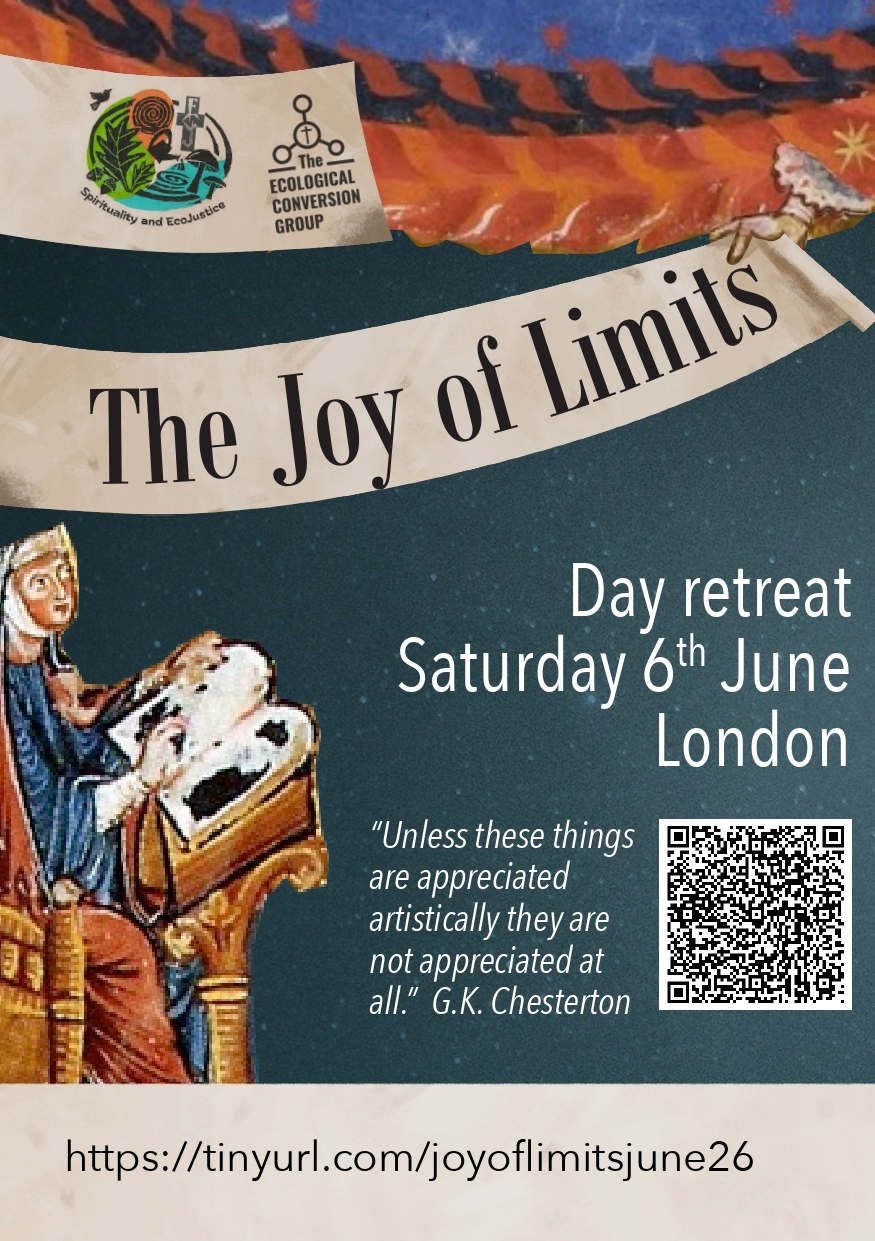
Saturday, 6 June, 10:00-16:00 BST: What role do artists play in helping to build a better world? Find out at the Joy of Limits, an in-person retreat hosted by the Ecological Conversion Group and the FCJ Centre for Spirituality and Ecojustice. There is a charge for tickets which go towards a day of contemplation, talks, discussion, observational and imaginative drawing, and sharing some simple food. Find out more and register here.
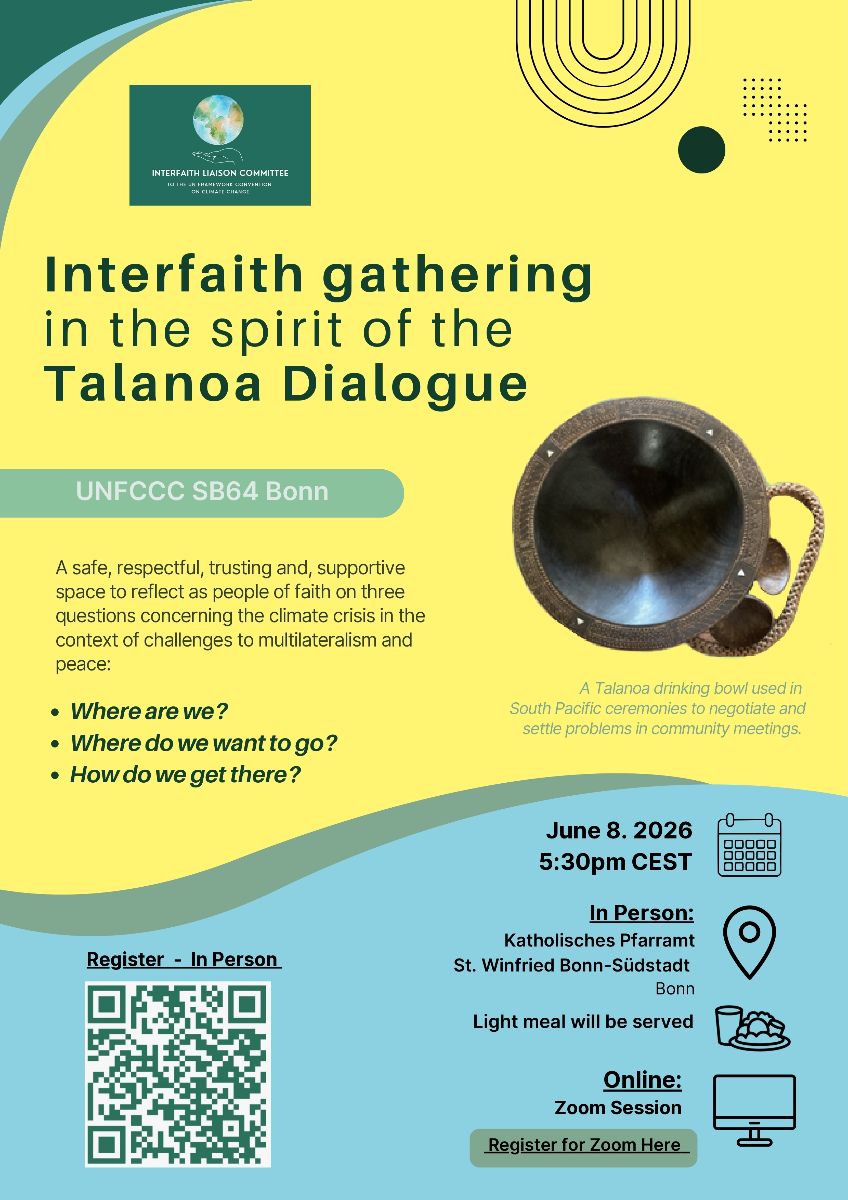
Monday, 8 June, 16:30-17:30 BST: The Bonn Climate Change Conference (known as SB64 this year) convenes 8-18 June in Germany. The Interfaith Liaison Committee to the UN’s climate change convention are convening a Talanoa Dialogue at the start of SB64 which can be joined online. Named after a drinking bowl used in South Pacific ceremonies to negotiate and settle problems in community meetings, Talanoa has become an interfaith fixture in international climate negotiations. It’s a safe, respectful, trusting and, supportive space to reflect as people of faith on three questions concerning the climate crisis in the context of challenges to multilateralism and peace: Where are we? Where do we want to go? How do we get there? Register to attend on Zoom.
Thursday, 11 June, 17:30-22:30 BST: If you’re in Bristol, join Roots and Rising: Celebrating Global Majority-led care for people and planet. It will be an evening of celebration to recognise the countless ways that Global Majority communities care for people and planet across Bristol. Find out more and register here.
Saturday, 13 June: Join the next XR Buddhists action, ‘Unloved Places Meditation’. Find out more and register on Eventbrite or contact Joe Mishan: joseph.mishan@phonecoop.coop.
INFORMATION RESOURCES
Because of my aforementioned Muharram mood, you’re getting a bumper crop of information resources this time. I’ve chosen articles that spotlight the less visible yet hugely important issues that often get missed in an age of algorithm-driven scrolling.
First, the bad news:
- This is an enlightening, albeit disturbing, piece about how the fossil fuel industry is more brazenly engaging in ‘native advertising‘ – producing paid content that closely resembles, and is thus often mistaken for, news coverage. If you’re wondering why there isn’t more critical mainstream coverage of the fossil fuel industry even amid escalating fossil fueled wars, genocides, and ecocide, here’s your answer.
- The fossil fuel industry also continues to profit from a little-known system of international tribunals that allows them to sue governments that try to pursue greener and healthier policies. Read more about the insidious energy charter treaty, which the UK is part of.
- Let there be no doubt that Europe’s biggest oil companies – Shell, TotalEnergies, and BP – continue to profit from the wars in Ukraine, Gaza, and Iran. Oil Change International has the numbers.
Now for the good news. Yes, good news!
- We’re excited that the first global conference on transitioning away from fossil fuels held in Colombia last April will now be followed by a gathering in 2027 co-hosted by Ireland and Tuvalu. I’m especially heartened by the 15 principles crystallised in the People’s Declaration for a Rapid, Equitable, and Just Transition for a Fossil-Free Future.
- One way to apply these principles in the context of the UK is to do something about the class issue that persistently holds back the climate and nature movement.
- Another way to uphold these principles is by learning from the ingenuity, leadership, and agency of diverse communities amongst the Global Majority and the milestones they have achieved for people and planet. I love this series, Global crisis, local solutions, by Global Voices. One lovely story is this one about reviving local seed production in Syria. And, as a lover of big cats, how could I not adore this compilation of endangered species making a comeback because of global conservation efforts?
- I learnt so much about the different Celtic traditions in Britain and Ireland that commemorate Alban Hefin, the Summer Solstice, in this article on the Order of Bards, Ovates and Druids website. I’m now doubly excited about the unexpected abundance of self-seeded St John’s wort in my garden this year.
- I was first enchanted by Okefenokee, the vast blackwater swamp on the Florida border of southeast Georgia, through a National Geographic television show I watched when I was a teenager. I’m hoping and praying that they succeed in getting recognised as a United Nations Educational, Scientific and Cultural Organization (UNESCO) World Heritage Site.
- Pope Leo XIV‘s first encyclical on artificial intelligence, Magnifica humanitas, is rightly getting a good amount of attention. Here’s a beautiful piece by the Sufi teacher Llewellyn Vaughan-Lee, who cautions against stumbling into a future where AI only further distances us from what we can feel with our senses and our soul.
Thank you for reading this far, and well done for all that you do for people and planet. To close, I’d like to share a Muharram-adjacent reflection.
This is a piece of advice from Ali ibn Abi Talib (c. 600-661 CE), the father of the martyred Husayn and the fourth caliph to lead the Muslim polity after Muhammad’s death, to his newly minted governor of Egypt:
Habituate your heart to mercy for the subjects and to affection and kindness for them. Do not stand over them like greedy beasts who feel it is enough to devour them since they are of two kinds, either your brother in religion or one like you in creation. They will commit slips and encounter mistakes. They may act wrongly, willfully or by neglect. So, extend to them your forgiveness and pardon, in the same way as you would like Allah to extend His forgiveness and pardon to you, because you are over them and your responsible Commander (Imam) is over you while Allah is over him who has appointed you. Allah has sought you to manage their affairs and has tried you through them…. Nothing is more inductive of the reversal of Allah’s bounty or for the hastening of His retribution than continuance in oppression, because Allah hears the prayer of the oppressed and is on the look out for the oppressors.
From the Nahj al-Balaghah (Peak of Eloquence).
Shanon Shah
Director at Faith for the Climate
About Faith for the Climate's monthly e-news
Faith for the Climate exists to encourage, inspire and equip faith communities in their work on climate change. If you have any items you would like to be included in upcoming editions of our newsletter, contact us, find us on Facebook, Instagram, and LinkedIn. Subscribe to our e-news here.