November 2026
Dear Faith for the Climate network,
Welcome to our refreshed newsletter format. Nothing’s changed in terms of style or substance – we’ve just integrated it with our new website (our pride and joy!). Let us know what you think.
November is peak convergence of visible faith and climate action or, in some cases, divergence, especially in the context of current geopolitics. In the UK, this is partly due to the overlapping of the annual UN climate conference with Inter Faith Week. Our prayers and good wishes go to any of you who might be travelling to Antalya, Türkiye to contribute in any way to COP31, or who are organising interfaith events, or both.
As important as these moments are in the faith and climate justice calendar, other moments are no less sacred or vital. There was a beautiful confluence of Celtic, Christian, and Buddhist festivals earlier this week – Samhain, All Saints followed by All Souls, and Lhabab Duchen. And later this week, Remembrance Sunday in the UK coincides with the Hindu, Jain and Sikh celebration of Diwali which, for Sikhs, is also commemorated as Bandi Chhor Divas. The final Sunday of this month marks the start of Advent, the new liturgical year in the Western rite of Christianity. Our best wishes go to any of you observing these moments in any way.
Since Diwali this year falls on 8 November, it essentially kicks off Inter Faith Week and COP31. And so I’d like to invite you to catch up with our interfaith webinar on the connections between Diwali and environmental justice from the perspectives of our Hindu, Sikh and Brahma Kumari members.
Our speakers also contributed to a special blog expanding upon their webinar contributions, which you can read here.
As a curtain raiser for COP31, we co-hosted a special webinar this week with the Centre for Applied Buddhism. Our speakers reflected on the seeds of hope and action that were planted at the UN climate talks in Glasgow back in 2021, COP26, which was formative for so many faith groups in the UK and worldwide.
As important as the COPs are, climate justice does not only revolve around UN conferences. Ahead of the 2nd International Conference on the Just Transition Away from Fossil Fuels in July 2027, we will be supporting Faiths Rising for a Fossil-Free Future, a global week of action this coming April. We will be announcing more details in good time – watch this space.
Essentially, there is no silver bullet to save us from the climate and environmental crisis at any single conference. Rather, the fundamental elements of climate and environmental justice are relational. To me, climate and environmental justice is basically about constantly and consistently (re)building, restoring, and repairing healthy, mutually flourishing relationships. Between persons, some of whom may not be human. Between humanity and the seen and unseen worlds, including the ecosystems we inhabit. And between and within our own bodies, hearts, and souls.
With that in mind, I hope you find sustenance and inspiration in this newsletter’s offerings of faith-inspired climate justice actions, events, and resources.
Spiritual grounding: The elements of climate justice
Even though these monthly updates are grounded in evidence of the escalating impacts of climate change, I write them from the comfort of my study at home here in London. What is embodied suffering for those on the frontlines of the climate and environmental crisis becomes a surreal, disembodied experience for me.
Or is it really that disembodied? I started reflecting on this question after reaching my reading limit recently with article after article about the continuing impacts of severe flooding, including the most recent catastrophe in Nepal and Tibet, the anniversary of last year’s Hurricane Melissa, and the long aftermath of the 2022 floods in Pakistan.
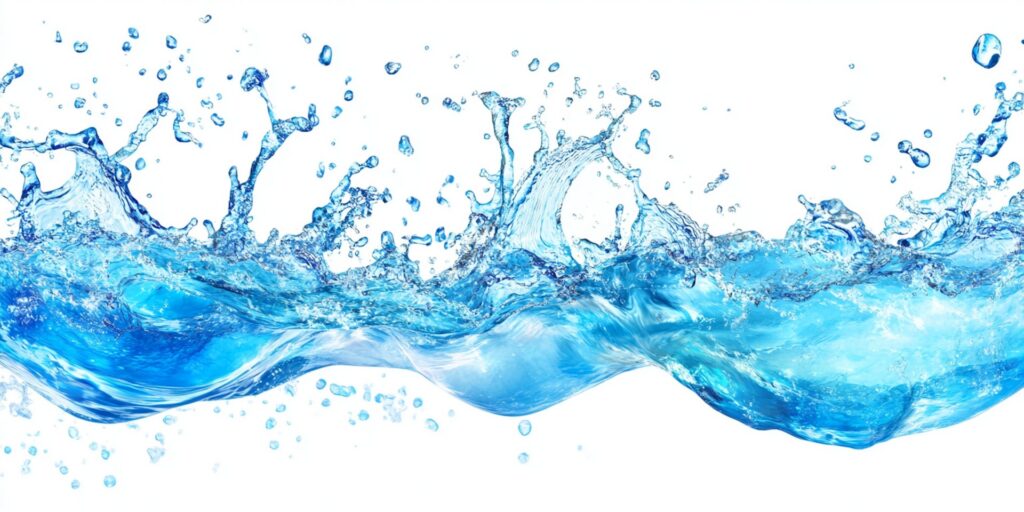
Not for the first time, I started crying at my desk. But this time, something struck me afresh about the involuntary leaking of tears from my eyes. I had a new appreciation for the simple fact that the human body is mostly made of water. Here I was, in floods of tears over these deadly floods. How unruly and painful the experience of water can become, I thought, whether in the excess water we shed as tears or in the excess water manifesting as floods and storms capable of destroying entire regions and countries.
My tears were neither unique nor new. In many of our faith traditions, water is often regarded as sacred and purifying. Yet these properties of water are not necessarily pleasant or comfortable.
As the psalmist says in the Hebrew Scriptures: ‘My tears have been my bread day and night, while people say to me continually, “Where is now your God?”’ The same psalm later refers to the terrifying power of ‘the thunder of [God’s] cataracts’, or gigantic waterfalls.
In the Islamic tradition there is hadith or saying attributed to the Prophet Muhammad, peace be upon him: ‘Beware of the supplication of the oppressed, for there is no barrier between it and God.’ In other words, the cries and yes, tears, of the oppressed are the purest of prayers.
This thought is comforting, but only partially when I personally think of so many other things that have made me cry even in the last week, including the genocides in Gaza and Darfur and escalating violence in the West Bank and Ukraine.
It has become almost a movement cliche that restoring nature holds the key to solving humanity’s woes. On one level the human-nature duality is artificial – ‘nature’, of course, includes humans. On another level, yes, there is no denying the regenerative and healing power of restoring nature, but it is also easy to forget that this restorative work has its discontents.
Take the example of water, which is not just a sacred source of life. When it is used to sustain golf courses or AI data centres, it becomes a resource that is extracted in the service of consumerist pleasure. When it is withheld from already-vulnerable communities supposedly as a political tactic, it becomes a weapon of war. When young children seeking relief from extreme heat die from the thermal shock of diving into cold rivers or lakes, it becomes an indifferent killer.
Perhaps, as people of faith, we can contribute to the making of a better future for all by not avoiding these multiple meanings of water, or nature more generally. Perhaps our most profound contribution is to reacquaint ourselves with the range of wisdom contained in faith traditions so that we can meaningfully work through these contradictions and arrive at truly just and transformative futures.
My tears are not the same as those of a parent pulling out their child’s corpse from the rubble in Gaza or an Indigenous community in the Amazon mourning the assassination of yet another environmental human rights defender.
Still, I do find a deeper, meaningful something as I reflect on what the psalmist says, ‘Why are you cast down, O my soul, and why are you disquieted within me? Hope in God; for I shall again praise my help and my God.’
Take Action: Get crafty for COP31
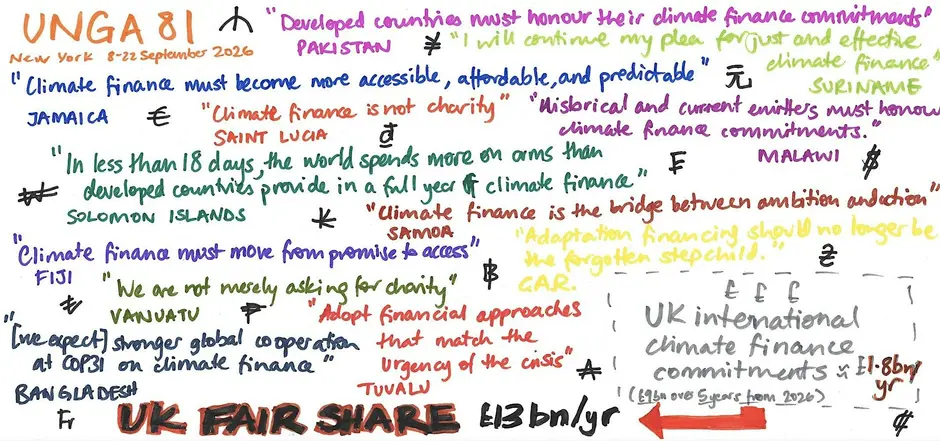
We’re getting a bit creative with our climate justice call-to-action for COP31 this year. Quakers in Britain have designed this activity – involving making symbolic money! – that they’d love for people of all faiths and backgrounds to contribute to. Sign up on Eventbrite and spread the word to get the activity guide. This call is open until 23 November.
Events during Inter Faith Week
Monday, 9 November, 11:00-12:00 GMT: Join EcoJudaism supporters at the ‘Kol for Climate’ vigil over COP 31 as they urge our government to take serious climate action. The theme of the vigil this year is ‘L’dor V’dor – from generation to generation’ and there will be representatives from every age speaking at the vigil. Booking is essential.
Tuesday, 10 November, 19:00-21:00 GMT: In an age of political division, rise of far-right politics, and backlash to net zero policies, how can faith inspire hopeful climate action? Join Operation Noah and Greenbelt Festival at St John’s Waterloo, London, for an inspiring evening marking the opening of COP31. Hear from Dr Ruth Valerio and Andy Flannagan to explore how faith communities and campaigners can respond to the climate crisis and growing polarisation with hope, courage and ambition. Find out more and book your place.
Wednesday, 11 November, 17:30-19:30 GMT: Beloved Faith for the Climate member Peter Musgrave has been interested in environmental issues since the 1990s and worked with NGOs in Bangladesh for 9 years. He developed a love for the rivers of Bengal as he travelled around the country and loved taking photos of what he could see. Join Peter and his friends for this night of photography, music, and friendship that connects rivers in Bengal and London. Find out more and register here. (The Eventbrite page says the event starts at 18:30, but Peter is hoping for folks to join from 17:30 for a pop-up exhibition.)
Other upcoming events
Friday, 13 November – Saturday, 15 November: Triratna Earth Sangha will be holding their sixth annual conference, ‘For Love of the Earth: the Bodhisattva path in a time of ecological crisis’. How do we respond to a world in ecological crisis with love rather than despair? What does it mean to care for the Earth as a practice of love? Find out more here.
Monday, 23 November, 6.45pm GMT: Jewish, Vegan, Sustainable (JVS) and EcoJudaism are hosting a screening of the People’s Emergency Briefing film followed by a discussion in Golders Green. Find out more and book your place here.
Tuesday, 24 November, 6-8.30pm GMT: As part of the Future of Religion series hosted by the World Community for Christian Meditation (WCCM), the celebrated Franciscan theologian Sister Ilia Delio will be speaking about how human evolution is accompanied by a shift in religious consciousness. She will also discuss the tensions with established religion and the search for new religious forms and meaning, particularly through technology. Here’s a five-minute preview of a previous talk she gave at WCCM. Sign up for the 24 November talk here.
Sunday, 29 November, 4-6pm GMT: Join Buddhist activists and psychotherapists Christine Meirion and Joseph Mishan as they facilitate a grief circle for the climate and ecological crisis. Find out more and register here.
Saturday, 5 December, 12pm GMT: Curious about how you can get more involved in the campaign to resist data centres and Artificial Intelligence? Faith for the Climate is supporting March Against The Machines, a major national demonstration taking place in London. Find out more and sign up here.
Resources

The Brahma Kumaris showcase their rural empowerment work with Indigenous communities, youth and women in India, accompanied with lovely pictures – a heartwarming lead-up to Diwali.
Here’s a great Christian resource that connects faith and social/environmental justice – ‘The Journey to 2030’, a lay-run project that supports the Church and its wider community to respond to the cry of the earth and the poor.
Ahead of the big March Against the Machines mobilisation, here are two thought-provoking articles about the impacts of AI. The first, from Action on Armed Violence, is a sobering assessment of the damage already being wreaked by AI weapons.
I’d recommend following it with this movingly beautiful essay by the artist James Bridle on their experiment in getting AI to help them build a chair (!). It starts with a captivating history of benchmarking that I never knew I needed.
Opportunities
Job opportunity: Are you based in Scotland or know anyone who is? Friends of the Earth Scotland are recruiting two people for the role of Director of Transformation to work as co-leads to develop the systems, skills, internal capacities and accountability frameworks that their new strategy requires.
London Community Climate Partnership (LCCP): Deadline for applications is midnight, Sunday 29 November. To find out more and apply, go to this link: https://www.groundwork.org.uk/london-community-climate-partnership/. If you have any questions, email molly.sweeney@groundwork.org.uk
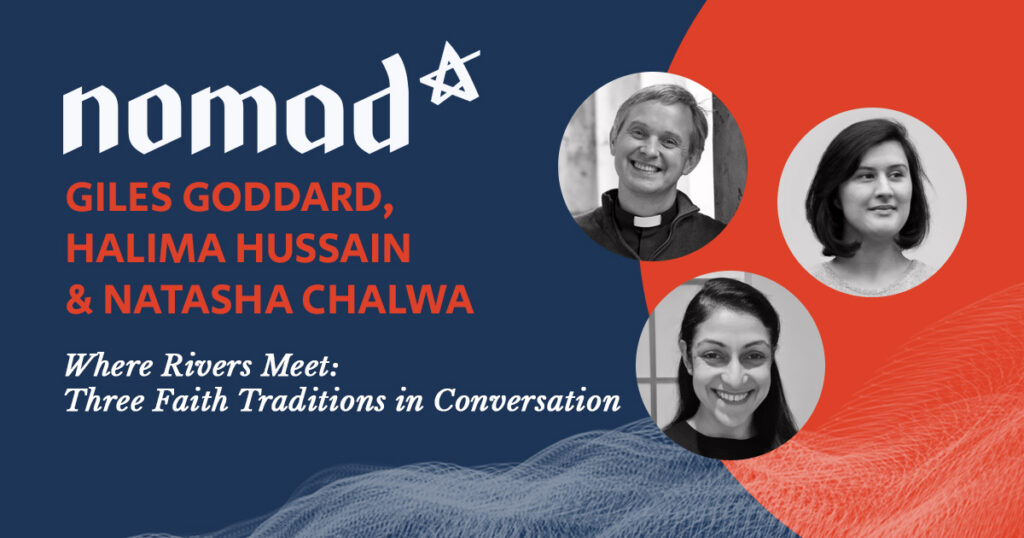
Thank you for reading this far, and for all that you do, sacred and secular, for people and planet. I started with a reflection on the elements of faith for climate justice within the context of COP31 and Inter Faith Week, including some uncomfortable or even unruly aspects. In keeping with this theme, I’d like to close by drawing your attention to a very lovely episode of the Nomad podcast that came out earlier this year, ‘Where Rivers Meet’, featuring our chair and co-founder Canon Giles Goddard.
In this conversation, Giles, an Anglican priest, is joined by Halima Gosai Hussein, a Muslim, and Natasha Chawla, a Hindu, for a wide-ranging exploration of faith, change, and the unexpected places where different rivers meet – physical and spiritual. Drawing on their journeys within Christianity, Islam, and Hindu philosophy, they reflect on the traditions they inherited, the moments that reshaped them, and what it means to remain rooted while allowing faith to evolve.
Enjoy!
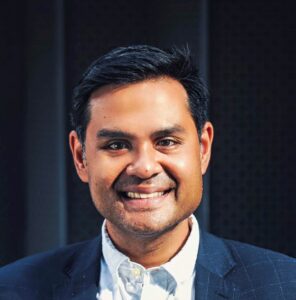
Shanon Shah
Director at Faith for the Climate
About Faith for the Climate's monthly e-news
Faith for the Climate exists to encourage, inspire and equip faith communities in their work on climate change. If you have any items you would like to be included in upcoming editions of our newsletter, contact us, find us on Facebook, Instagram, and LinkedIn. Subscribe to our e-news here.