Faiths for Climate Justice:
Our principles
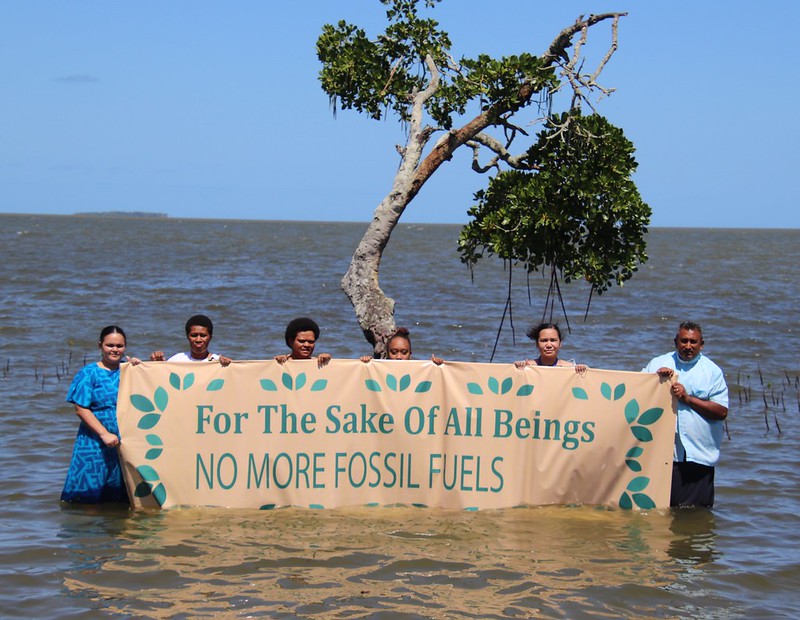
Those who suffer most from the effects of the climate crisis are rarely those who have done most to cause it. As people of faith, we recognise this to be a deep injustice, and call for rich countries and big polluters to help those worst affected. We work based on the following principles:
- Our responsibility is global. Many of our faiths and belief systems share a ‘Golden Rule’: treat others as you wish to be treated. In a globalised world, this doesn’t apply only to our near neighbours – it calls us to take responsibility for the global impacts of our actions. The UK and other rich countries have built their wealth by burning vast quantities of coal, oil and gas. This is causing global heating, and the impacts are felt first and worst by those who are least responsible. This is an immense moral wrong. To address it, countries like the UK must transition away from fossil fuels fastest, and must contribute their fair share of finance to the transition in other parts of the world.
- Peace, justice and human rights must be at the heart of our response. We must rapidly phase out fossil fuels to bring greenhouse gas emissions to near zero. However, it’s not enough just to cut carbon. Climate action must also include helping communities to adapt to climate change, and to be compensated for the loss and damage caused by climate change. Peace and human rights must always be at the heart of climate action.
- The zero-carbon transition must be paid for by the richest and the biggest polluters. Inequality isn’t just global: there is a huge wealth divide in the UK too. We believe all life is sacred, and we deplore the rise in poverty and inequality witnessed in the UK in recent years. The transition beyond fossil fuels should be designed to address economic and social inequalities in the UK. Money for global climate action should come from the richest and from polluting corporations and should not make the poorest in the UK poorer.
- Climate action must go hand in hand with ecological restoration. The crises of climate change and nature loss result from the same problem: overconsumption and exploitation of the natural world. Love and care for nature and all beings must be the foundation of our response. We are part of the living world and cannot thrive in isolation from it.
- The transition belongs to all of us. Decisive action is needed, but this must not be at the expense of communities’ control over their own lives. We need spaces where all people can contribute with creativity and moral and spiritual imagination to the challenges we are facing, especially those from under-represented sectors of British society, including those who identify as Black, Indigenous, and People of Colour (BIPOC); other minority ethnic communities in the UK, including Gypsy, Roma and Traveller (GRT) and Jewish communities; people with disabilities; people who identify as being lesbian, gay, bisexual, trans, or queer (LGBTQ+); people who have a mental health condition; and people who identify as working class or have done so in the past. We should all be able to participate in determining our shared future.
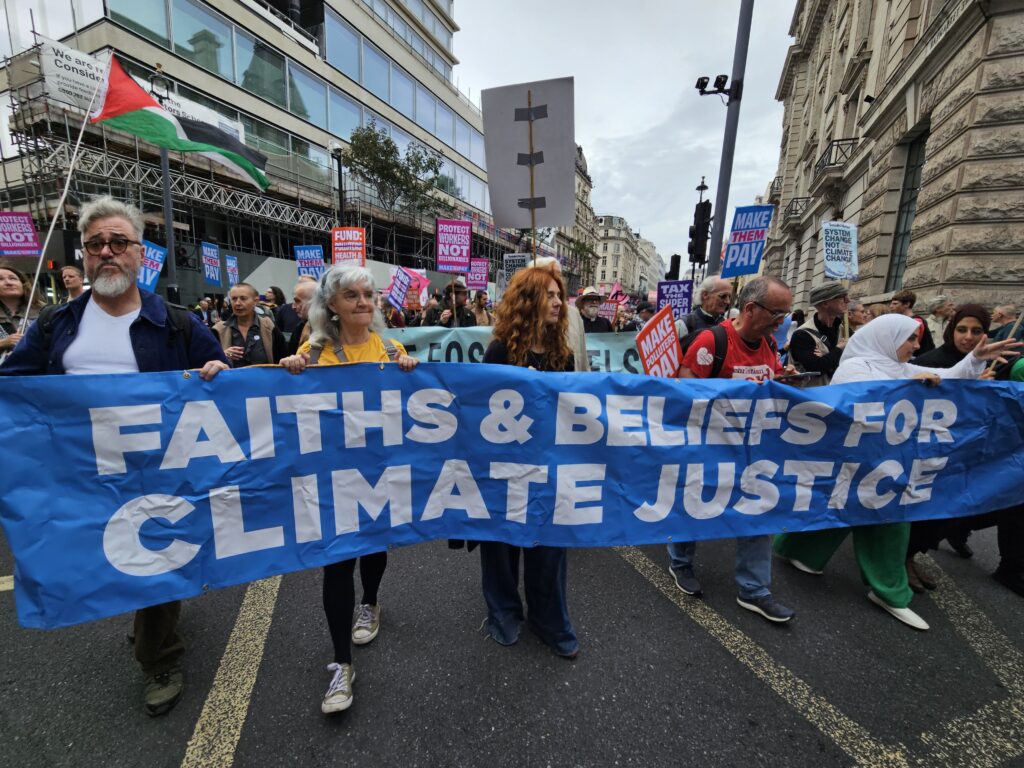
Click through to see our three areas of work on faith-inspired climate justice: